

Some mornings start with a toothbrush that never makes it to the sink. It stays tucked in a drawer. Or it ends up dry in a cup, untouched, like the day quietly voted “not today.” For families living with memory change, various remedies tend to be tried and tested. The technique of brushing teeth with a non-dominant hand to prevent or delay dementia can feel like a small idea with a huge hope behind it. Maybe this one trick will make life easier. Maybe it will slow the slide. Maybe it will help a loved one feel like themselves again.
If this topic is coming up because brushing has become tense, uneven, or easy to forget, it can help to talk to a team that understands both dentistry and dementia routines. A subtle next step is booking guidance through the Dental Home Services team, starting with the contact page.
The good news is that routines still matter a lot. The gentle correction is that brushing teeth with non dominant hand dementia prevention should be treated as a routine support strategy, not a dementia prevention promise. In a large study published in Brain Communications, the authors concluded that “handedness does not appear to affect neuropsychological performance or neuropsychiatric symptoms in common neurodegenerative diseases.” For families, that usually means the non dominant hand idea may still help with cooperation and habit, but it should not be marketed as a shield against dementia.
Why This Idea Spreads (And Why It Still Can Help)
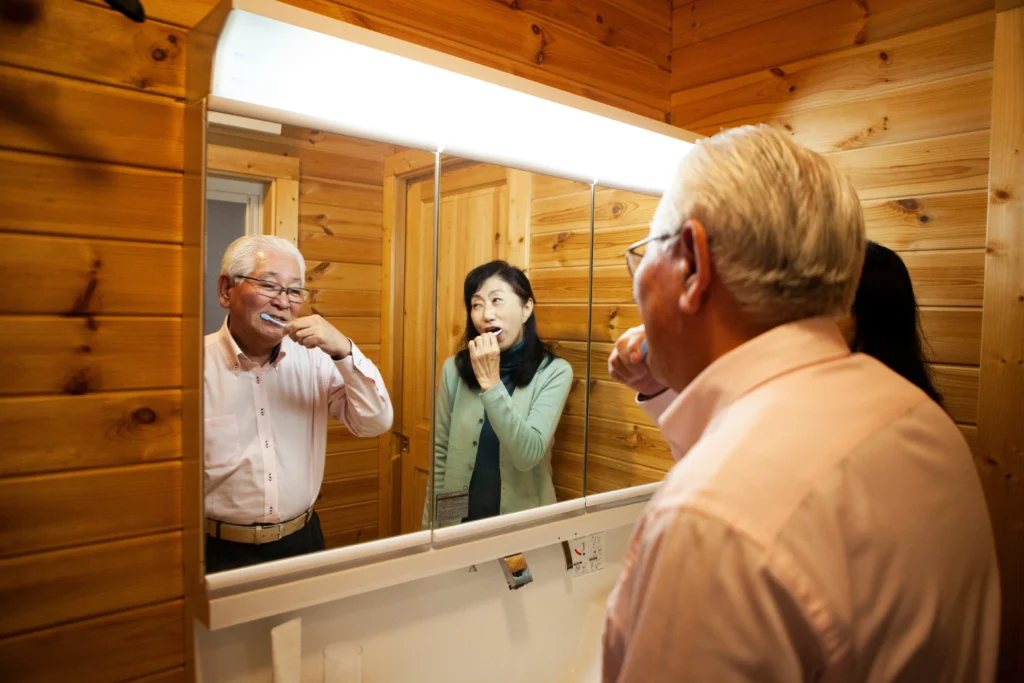
There is a reason caregivers share this tip. Dementia often changes sequencing and follow-through. Brushing is not one action. There are many actions in a row. Pick up the brush. Add paste. Start. Spit. Rinse. Put it away. A small change, like switching hands, can sometimes interrupt autopilot and bring attention back to the task.
What “Neuropsychological” Actually Means Here
“Neuropsychological performance” is a clinical way of saying “how someone performs on tests of thinking.” That can include attention, memory, processing speed, and problem-solving. The study’s bottom line is that handedness itself is not a reliable lever for changing those outcomes.
What Caregivers Can Take From That
Brushing teeth with non dominant hand dementia prevention can still be useful if the goal is:
- Helping a person stay present for 60 seconds
- Making the routine feel “new” enough to try again
- Reducing resistance by changing the script
It is less useful if the goal is:
- Preventing dementia progression
- Replacing consistent oral care
- Solving pain, infection, or denture fit issues with “practice”
If you want the “why oral care matters” version in plain language, the Dental Home Services guide on the link between brushing teeth and dementia helps frame the bigger picture without turning it into a blame story.
A Quick Table: What You See and What to Do Next

Caregivers rarely need more guilt. They need a map. This table connects common moments to practical next steps that keep the routine moving.
| What You Notice | What It Might Mean | What to Try Today | When to Get Help Fast |
| Brush is held but not used | Sequencing is breaking down | Hand-over-hand start, then step back | If eating also changes suddenly |
| Anger or swatting at the brush | Sensory overload or pain | Shorter brushing, warm water rinse first | If facial swelling, fever, or foul taste |
| Brushing happens but misses gumline | Fine motor decline | Smaller brush head, slow counts | If gums bleed heavily or breath shifts резко |
| Refuses toothpaste | Taste or foam is upsetting | Unflavoured or mild paste, tiny amount | If refusal is new and constant |
| Chews brush or clenches | Anxiety, habit, or grinding | Offer a pause, then return gently | If tooth wear, jaw pain, or headaches |
| Dentures are removed repeatedly | Soreness or fit problem | Clean thoroughly and check pressure points | If sores, cracks, or looseness |
If dentures are part of the routine, add a dedicated cleaning step using guidance like a cleaner for dentures so “brushing avoidance” does not quietly become “denture discomfort.”
Brushing Teeth With Non Dominant Hand Dementia Prevention: A Safer Way to Test It
This is where the idea becomes practical. The goal is not perfect technique. The goal is a calm, repeatable win.
1. Start With Safety, Not Technique
Before trying brushing teeth with non dominant hand dementia, run a quick safety check:
- Make sure the person is seated and supported
- Use a towel or bib to reduce stress about mess
- Keep lighting soft and direct, not overhead glare
- Avoid rushing. Speed can look like threat
If resistance has been escalating, it helps to review caregiver-friendly tactics in how to brush a dementia patient’s teeth and then return to the non dominant hand experiment later, when the mood is steadier.
2. Use the “Two-Step Hand” Instead of a Full Switch
A full hand switch can feel awkward and frustrating. Try a gentler version:
- Step A: Ask the person to hold the brush with the non dominant hand for five seconds
- Step B: Let them switch back to their usual hand for brushing
- Step C: Repeat once tomorrow, not ten times today
This still disrupts autopilot, but it does not force a new motor skill during a stressful moment.
3. Keep the Routine Short Enough to Succeed
A routine that succeeds is a routine that repeats.
Try:
- 20 seconds front teeth
- 20 seconds chewing surfaces
- 20 seconds gumline sweep
If the person will not tolerate a full brush, a “minimum viable routine” can still protect oral health. The Dental Home Services guide on how to clean teeth of a dementia patient is useful for those pared-down days.
When It’s Not a Habit Problem (It’s a Mouth Problem)
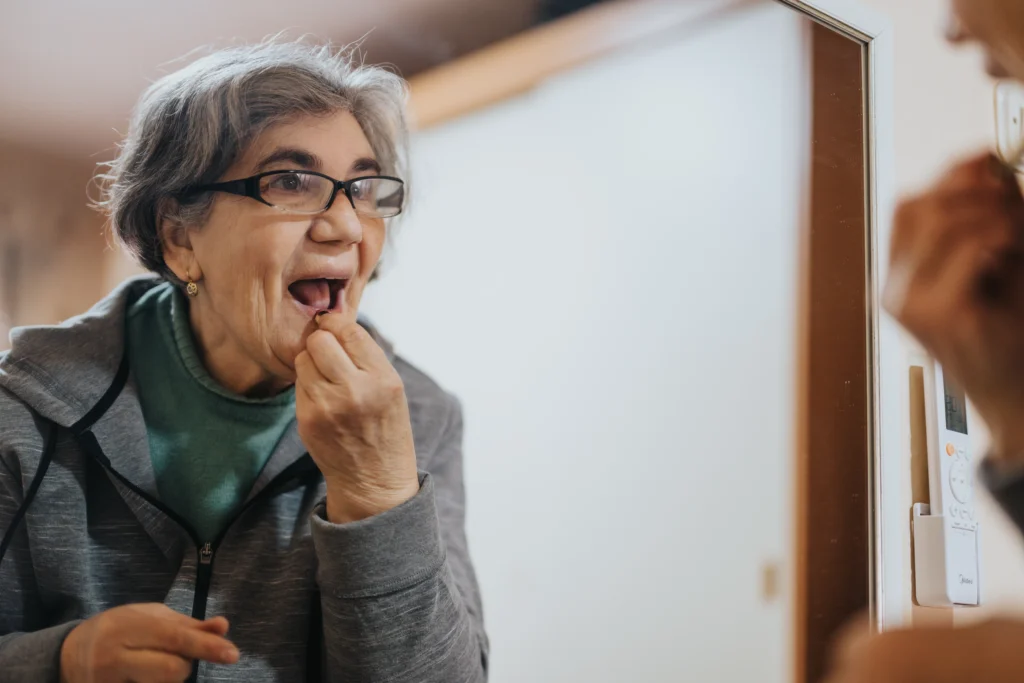
This is the part caregivers deserve to hear clearly. Sometimes the routine collapses because something hurts.
Brushing teeth with non dominant hand dementia prevention will not fix:
- A cracked tooth
- A gum infection
- A denture that is rubbing
- A jaw that is sore from clenching
If the pattern is “won’t brush” plus “won’t eat” plus “new agitation,” treat it like a mouth assessment problem first. The caregiver-focused breakdown in dementia patients won’t brush teeth can help families spot when refusal is likely a symptom, not stubbornness.
1. Clenching and Grinding Can Hijack Brushing
Teeth grinding and jaw clenching can make the mouth feel tender. Even a soft brush can feel sharp.
If you suspect grinding:
- Look for flattened tooth edges
- Watch for morning jaw stiffness
- Notice if the person chews on the brush instead of brushing
The Dental Home Services explainer on dementia and teeth grinding is a strong companion piece here because it connects behaviour to oral causes.
2. Dentures Change Everything About “Brushing”
If dentures are loose or sore, the person may resist brushing because they associate the whole routine with discomfort.
Helpful steps:
- Clean dentures daily
- Rinse the mouth even when brushing fails
- Check for red spots or sores
- Avoid forcing dentures back in if the gums look inflamed
If the person is in assisted living or a community setting, the broader context in dementia and dental care can help families and staff stay aligned on what “good oral care” looks like when memory is changing.
What Research Suggests About Brushing Teeth with a Non Dominant Hand
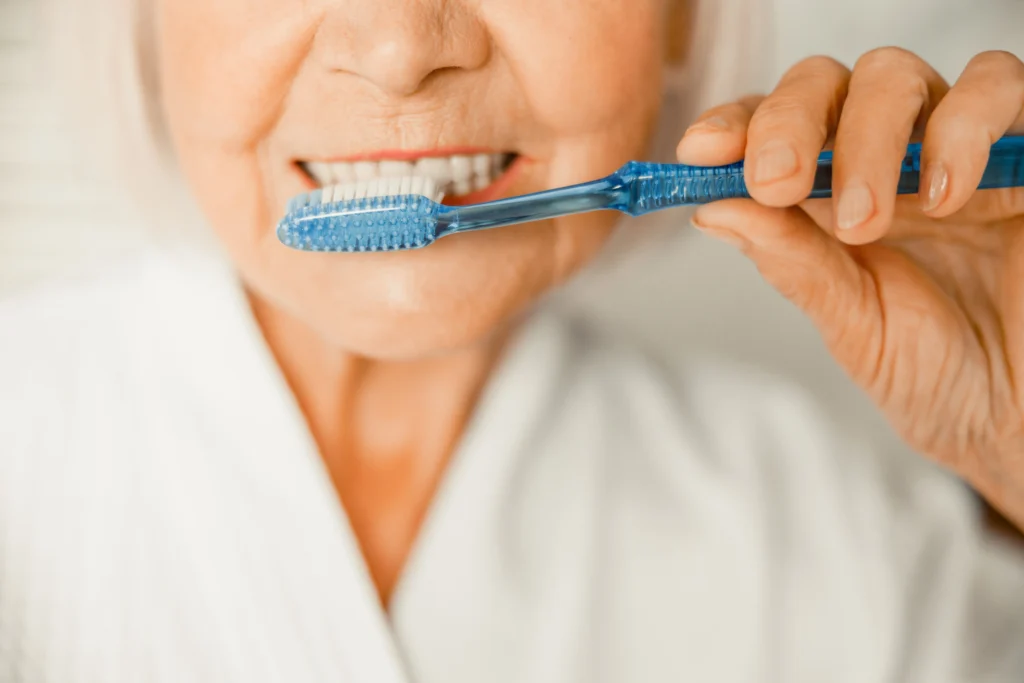
Families ask for a clean answer: does switching hands help prevent dementia?
The most honest answer is:
- Switching hands may help attention and routine for some people
- Switching hands is not proven to prevent dementia
- Consistent oral care is still worth pursuing for comfort, infection prevention, and quality of life
The study in Brain Communications used a large dataset and found that handedness did not meaningfully change cognitive test outcomes or neuropsychiatric symptoms in common neurodegenerative conditions. A related commentary in Brain Communications also summarizes the core finding as “overall, handedness had no effects on most neuropsychological tests and none on neuropsychiatric symptoms.”
So what is the real value of this idea?
It is a behavioural tool. Not a medical claim. Used well, it can lower resistance and keep the mouth cleaner. Used as a miracle cure, it disappoints families who already have enough on their plates.
A Routine Caregivers Can Actually Stick With
This is a simple routine that respects the realities of dementia care. It works whether or not you use the non dominant hand.
1. Set the Scene in 30 Seconds
- Same spot, same time, same steps
- Put the brush in their hand before you explain anything
- Use one sentence, not five
2. Offer Two Choices Only
Too many options can be overwhelming.
Try:
- “Do you want to brush first, or rinse first?”
- “Do you want the blue brush or the green brush?”
3. Use a Calm Prompt, Then Pause
A short prompt, then silence, often works better than coaching.
Try:
- “Start with the front teeth.”
- Pause for five seconds.
- Then gently guide again.
4. If the Person Is Stuck, Use Hand-Over-Hand for 10 Seconds
Hand-over-hand is not taking over. It is borrowing your sequencing.
Then give control back.
5. End With a Win
End with something that feels like success:
- A rinse
- A wipe with gauze
- A “we did it” tone
If you need support that goes beyond coaching, families can schedule a visit or ask questions by calling 1-800-842-4663. This can be especially helpful when brushing struggles are tied to pain, infection risk, or denture fit.
NJ and NY Residents: A Small Shift That Protects Comfort

If brushing teeth with non dominant hand dementia prevention is coming up because something has changed with eating, breath, brushing, or dentures, the most helpful move is to focus on comfort first. Better brushing is not about perfection. It is about preventing small oral problems from turning into big behaviour changes.
When families want help building a routine that actually holds, they can request support through the Dental Home Services contact page. A quick conversation can help caregivers decide whether the next step is technique, evaluation, or both.
Frequently Asked Questions About Brushing Teeth With Non Dominant Hand Dementia
Does brushing teeth with non dominant hand dementia prevent dementia?
It should not be presented as proven prevention. Research in Brain Communications found that handedness does not appear to affect cognitive test performance or neuropsychiatric symptoms in common neurodegenerative diseases. The non dominant hand approach can still help some people stay engaged with the brushing routine.
What if switching hands makes my loved one more frustrated?
Scale it down. Use the “two-step hand” approach where they hold the brush briefly with the non-dominant hand, then switch back to their usual hand. Keep the goal small and repeatable.
What are signs the problem is tooth pain, not stubbornness?
Look for patterns instead of complaints. Refusing food, pulling at the mouth, removing dentures repeatedly, new agitation during care, or sudden refusal to brush can be pain signals. If those show up fast, it is worth arranging an evaluation.
Can caregivers do anything on days when brushing is impossible?
Yes. A minimum routine can still help: rinse with water, wipe teeth and gums gently, and clean dentures thoroughly if they are worn. Consistency matters more than perfection.
Does grinding matter if the person is not complaining?
Yes, because grinding can create soreness and sensitivity that makes brushing feel intolerable. If the person clenches, chews the brush, or seems jaw-tense, address that possibility and consider an evaluation.
Can Dental Home Services come to assisted living or a private home?
Yes. The practice is mobile across all of NJ and parts of NY, including home visits and community settings. Families can confirm coverage and schedule options directly with Dental Home Services.
Disclaimer
This article is for general educational information only and is not medical or dental advice. Dementia care needs to be individualized, and oral symptoms can have many causes. For diagnosis and treatment recommendations, consult a licensed dentist, physician, or qualified healthcare professional. If there is severe facial swelling, difficulty breathing or swallowing, uncontrolled bleeding, fever, or a suspected serious infection, seek urgent medical care immediately or call emergency services.