
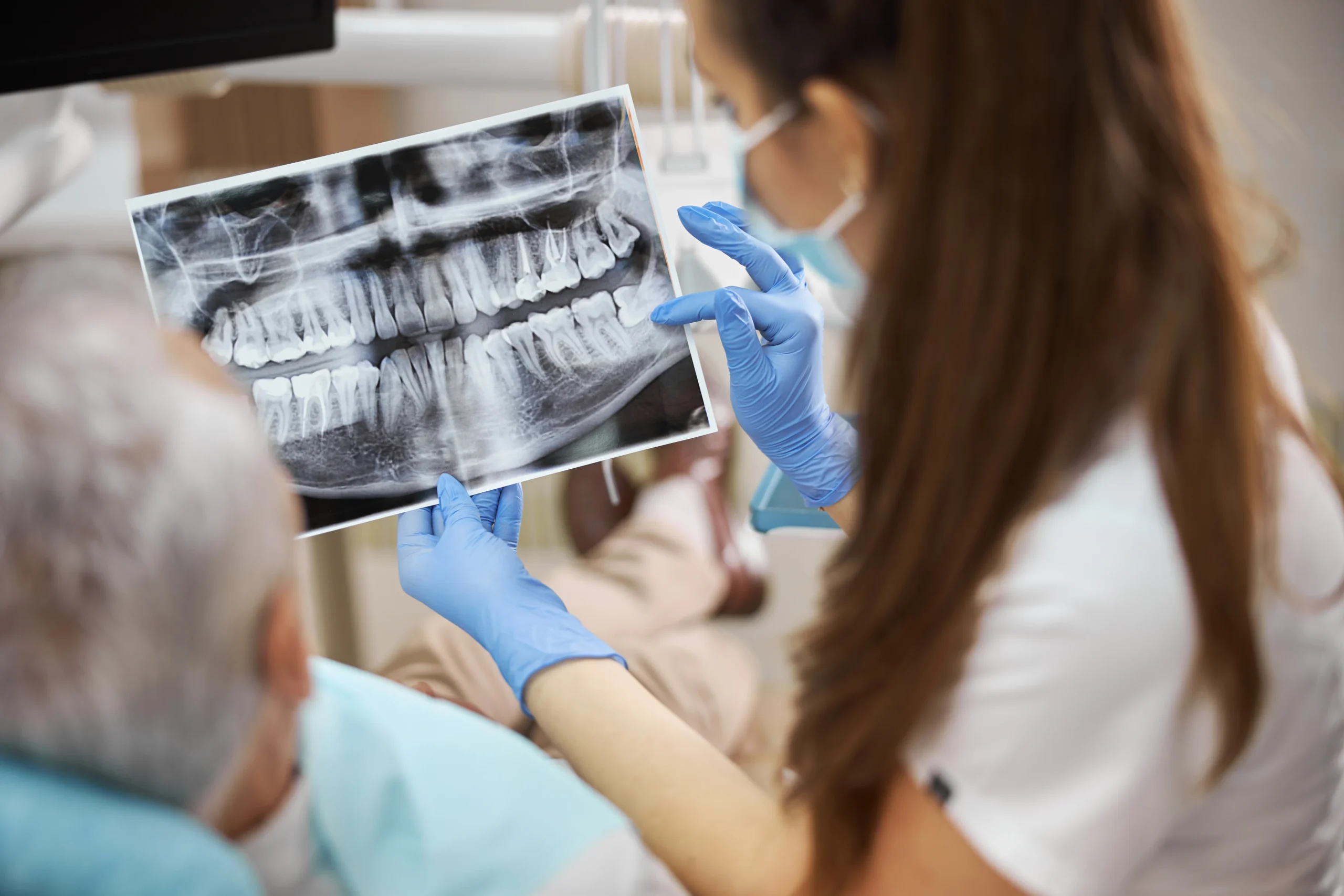
Family caregivers rarely begin with research. They begin with a worrying shift in routine. They start with a moment. A loved one stops chewing on one side. Dentures come out after every meal. Brushing becomes a struggle, even when it used to be routine. Then, late at night, one search keeps showing up on the screen: “can rotten teeth cause dementia”.
That question deserves a calm, practical answer. Research does not offer a universal yes or no, but oral infections and chronic inflammation can add strain to the body, especially in older adults. That strain can show up in very real ways: poorer sleep, reduced appetite, dehydration, and increased agitation, particularly when someone cannot explain what hurts. In other words, even if dementia is already present, untreated dental problems can make day to day life harder and more unpredictable.
For homebound seniors and people with disabilities, access is often the barrier that keeps problems unsolved. Mobile dentistry helps families act sooner, which can prevent small problems from turning urgent. Dental Home Services provides in home dental care for seniors and patients in care communities across all of New Jersey and parts of New York.
🗓️ To request an appointment, caregivers can use the contact page or call 1-800-842-4663.
How Could Rotten Teeth Cause Dementia? What Research Suggests
Many caregivers type “can rotten teeth cause dementia” because they want certainty. Most health research works in probabilities and patterns, not absolutes. A common finding across studies is association, meaning oral health problems and cognitive decline can appear together more often than chance would predict.
A more natural way to think about it is this secondary phrasing: the connection between severe tooth decay and cognitive decline is complex. Sometimes oral health issues add stress to the body. Sometimes cognitive decline makes brushing and dental visits harder, so oral health worsens. Often, both dynamics are happening at the same time.
For caregivers who want a trustworthy baseline on senior oral health, the National Institute on Aging explains practical prevention and daily care in its guidance on taking care of teeth and mouth health. That kind of routine focus matters, because it gives families something concrete to improve today, even when the science conversation feels overwhelming.
A Clear Example Of How These Issues Can Overlap
A senior develops early memory changes and starts skipping nightly brushing. Months later, gums bleed more easily, a tooth becomes sensitive, and chewing shifts to one side. The question “can rotten teeth cause dementia” may come up, but the immediate reality is simpler: the mouth is painful, and pain is now affecting eating, sleep, and behavior.
Can Rotten Teeth Cause Dementia? Quick Checks And Next Steps

Caregivers wondering if rotten teeth can cause dementia usually need practical guidance more than a deep research debate. The most honest answer is that severe decay does not “flip a switch” and create dementia overnight. However, untreated tooth decay can create pain and infection, and those problems can trigger confusion, agitation, poor sleep, and eating changes that make cognitive symptoms look worse. In other words, the most important issue is often not proving a cause. It is identifying whether there is an oral health problem making daily life harder right now.
This table connects common observations to next steps that reduce risk.
| What A Caregiver Notices | What It Can Mean | What To Do Next |
| Chewing slows or switches sides | Tooth decay, crack, gum tenderness | Book a dental evaluation soon |
| Sudden bad breath that persists | Infection or trapped debris | Schedule an assessment promptly |
| Gum swelling or bleeding | Inflammation, gum disease | Improve cleaning and arrange care |
| A dark, broken, or crumbling tooth | Advanced decay, higher infection risk | Seek treatment as soon as possible |
| Dentures suddenly feel “intolerable” | Pressure sore, fit change | Pause painful wear and get checked |
A Simple Mouth Check That Stays Calm
If rotten teeth causing dementia is the worry, a short check can help caregivers decide whether it is urgent.
- Look at the face for swelling or asymmetry.
- Notice whether one cheek or jaw looks fuller than the other.
- Check the front gums if tolerated. Look for redness, bleeding, or a bump.
- Observe eating. Watch for one sided chewing, grimacing, or stopping mid bite.
- Note any sudden refusal of brushing, dentures, or mouth care.
If swelling is visible, treat it seriously. In older adults, infections can escalate quickly.
Why This Question Shows Up So Often In Seniors
Families often search “can rotten teeth cause dementia” when a loved one becomes homebound or medically complex. Dental problems do not pause, but access to care can collapse.
Real Life Barriers Caregivers Run Into
- Transportation becomes unsafe or distressing.
- Transfers require multiple people, so appointments get delayed.
- Arthritis or tremors make brushing inconsistent.
- Medication related to dry mouth increases decay risk.
- Short visits hide problems that build up between family check ins.
In dementia care, pain is often expressed as a pattern, not a complaint. A person may refuse food, remove dentures, or resist brushing without being able to explain why. That is why the question “can rotten teeth cause dementia” often really means: what is driving this change, and how fast should care be arranged? Home dental visits make the ordeal easier.
When A Tooth Looks Rotten Or Breaks, Act Quickly

One reason rotting teeth feels urgent is that dental issues can turn rapidly. A tooth that is crumbling, a gum bump, or facial swelling may point to infection risk.
The Most Common Caregiver Scenarios
- A loved one starts eating only soft foods.
- Dentures come out immediately after being placed.
- A tooth looks darker than the surrounding teeth.
- The person touches the cheek or jaw repeatedly.
- Breath changes suddenly and does not improve.
If caregivers are dealing with a tooth that has broken near the gum, Dental Home Services explains the situation clearly in its guide to what it can mean when a decayed tooth breaks off at the gum line. That scenario often signals advanced decay and should be assessed promptly.
Why Waiting For “Proof” Usually Backfires
With dementia, caregivers may wait for a clear pain report. The problem is that discomfort can be real even when the person cannot describe it. If someone is repeatedly searching “can rotten teeth cause dementia,” it is usually a signal to rule out pain and infection sooner rather than later.
Why Mobile Dentistry Helps When Office Visits Are Not Realistic
If families are stuck wondering, “can rotten teeth cause dementia,” they often feel stuck for a simple reason: they cannot get their loved one to a dental office. Mobile care removes that barrier.
Dental Home Services breaks down how dentist home visits work and why home based care is often the most realistic option for seniors who cannot travel safely or comfortably. A common example is a caregiver who schedules an office appointment, but the patient refuses to get in the car or becomes distressed. The appointment is cancelled. The tooth worsens. A home visit prevents that cycle.
Support For Assisted Living And Memory Care Communities
Families may also ask “can rotten teeth cause dementia” after a parent moves into assisted living and daily routines change. Dental Home Services supports senior communities with mobile care designed for assisted living facilities, so residents can be evaluated without stressful transportation.
Support For Nursing Home Residents
For residents with higher care needs, oral health is often delayed until it becomes urgent. Dental Home Services also provides nursing home and assisted living dentistry, helping facilities address comfort and infection risk earlier.
Dementia Focused Dental Care That Reduces Distress
When caregivers ask “can rotten teeth cause dementia,” dementia may already be present. In that situation, the approach to care matters as much as the treatment itself.
Dental Home Services explains how it supports patients through its role as a visiting dentist for Alzheimer’s and dementia patients. Dementia informed care often means calmer pacing, caregiver involvement, and practical steps that lower fear and resistance.
Examples That Often Point To Mouth Pain In Dementia
- Brushing becomes impossible after months of cooperation.
- Meals become smaller, slower, or more selective.
- Dentures are removed repeatedly, especially after eating.
- Sleep becomes lighter, with more nighttime restlessness.
In many cases, addressing oral discomfort reduces stress for both the patient and the caregiver, even if it does not change the dementia diagnosis itself.
What Dental Care Can Look Like For Seniors

People searching “can rotten teeth cause dementia” sometimes assume the only options are extremes. Most seniors need a realistic plan that prioritizes comfort, safety, and infection control.
Dental Home Services outlines what can be addressed during care on its services page. Treatment planning is also shaped by senior specific factors, including medications, dry mouth risk, mobility limits, and cognition. That is why the DHS clinical approach is grounded in geriatric dentistry, which supports care that fits the patient’s whole health picture.
For caregivers who want reassurance before scheduling, patient experiences are available through the reviews page.
NJ and NY Residents: If Eating Or Brushing Changed, It’s Time To Check In
If “can rotten teeth cause dementia” is coming up because something has changed with eating, breath, brushing, or dentures, it is worth booking an evaluation now. Caregivers can request a visit through the Dental Home Services contact page or call 1-800-842-4663.
Frequently Asked Questions Like “Can Rotten Teeth Cause Dementia”
Is there a simple yes or no answer?
There is not a universal yes or no. Many studies show links between oral health problems and cognitive decline, but association does not prove direct causation in every person. Even so, advanced decay and infection can increase inflammation and worsen comfort, which can make dementia care harder.
What are clear examples of dental red flags in dementia?
Examples include a sudden shift to soft foods only, chewing on one side, persistent bad breath, gum swelling, a tooth that looks broken or dark, and new resistance to brushing or dentures. In dementia, the pattern is often the clue, because the person may not be able to describe pain.
Why can dental discomfort look like worsening dementia?
Pain can cause agitation, meal refusal, sleep disruption, and withdrawal. When a person cannot name the pain, caregivers may interpret the change as cognitive decline. Addressing dental discomfort can reduce the strain that may be amplifying behaviours.
Can care be provided in assisted living or nursing home settings?
Yes. Mobile dentistry can reduce delays and prevent stressful transportation. It also supports consistency when a person’s care setting changes.
How can Dental Home Services help if a caregiver is worried about oral health and memory changes?
If a caregiver keeps returning to “can rotten teeth cause dementia,” the practical goal is to reduce infection risk and restore comfort. Dental Home Services provides mobile dentistry for homebound seniors and patients in care communities, helping families address oral health problems earlier.
Disclaimer
This article is for general educational purposes only and is not medical or dental advice. Dementia symptoms and dental conditions can change quickly and may require urgent evaluation. If there is facial swelling, fever, difficulty swallowing, or a rapid decline in condition, seek emergency medical care immediately. For personalized guidance, please consult a licensed dentist, physician, or qualified healthcare professional.