

Families across New Jersey and New York often feel lost when they start noticing changes in their loved one’s mouth. Teeth become loose. Gums look irritated. Eating becomes harder. Suddenly, what used to be part of a normal daily routine turns into a worrying sign.
If you are looking up dementia losing teeth, you are already paying close attention. That matters. Oral health decline is one of the earliest and most overlooked indicators that something deeper is changing in the body and brain. When you know what to look for, you can step in sooner and prevent serious complications.
Below is a gentle but clear guide to help you understand the warning signs, what they mean, and how you can take action with support from the specialists at Dental Home Services.
For Families Navigating Difficult Changes…
If your loved one is showing early signs of dementia tooth loss, our in-home dental team can help. Reach out to Dental Home Services to schedule comfortable, compassionate care right where they live.
Dementia Patients Losing Teeth is Unfortunately Common
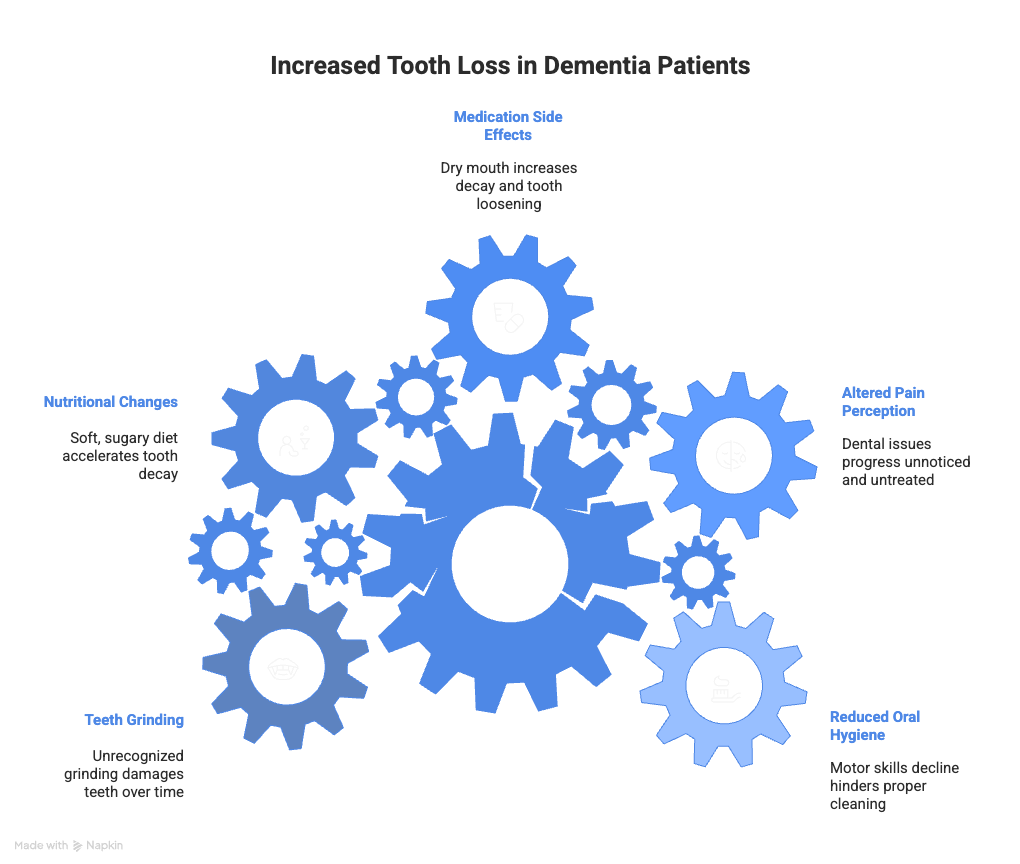
Cognitive decline affects much more than memory. As dementia progresses, changes in behavior, mobility, and sensory processing all contribute to dementia dental issues that go unnoticed until damage is already severe.
1. Reduced Ability to Brush or Floss
Motor planning becomes harder. People forget steps, lose coordination, or cannot tolerate brushing sensations.
2. Changes in Pain Perception
Many individuals stop expressing dental discomfort. Cavities grow silently. Gum disease progresses without the usual warning signs.
3. Medication Side Effects
Dry mouth is extremely common and increases the risk of dementia oral health problems, tooth decay, and loose teeth.
4. Nutritional Changes
Difficulty chewing or a preference for soft, sugary foods can accelerate dementia tooth loss.
5. Grinding or Clenching
Teeth grinding is common and often unrecognized. Families can learn more in our dedicated article on dementia and teeth grinding.
Warning Signs of Dementia Damaged Teeth You Should Never Ignore
The earlier you identify these symptoms, the easier it is to prevent infections or painful emergencies.
1. Swollen or Bright Red Gums
This is often the first sign of gum disease that leads to dementia loose teeth.
2. Dark Spots or Cracks
These indicate decay that may already be deep.
3. Avoiding Cold or Hot Foods
Sensitivity can be an early clue of deeper structural damage.
4. Difficulty Eating or Chewing
Loved ones may avoid meals due to pain but be unable to communicate what hurts.
5. Teeth Moving Out of Place
Shifting or wiggling teeth often signal late-stage decay or gum disease.
For individuals with cognitive impairment, these changes progress quickly. A small problem in March can become a severe infection by May if untreated.
Why Do Dementia Patients Lose Teeth?

The root causes are often a combination of biological and behavioral factors. Here are the most common:
1. Gum Disease Caused by Inflammation
This is the number one cause of dementia damaged teeth.
2. Untreated Cavities
When daily oral care becomes inconsistent, cavities form and spread faster.
3. Forgetting to Rinse or Remove Dentures
Over time, this leads to debris buildup, sore spots, and bacterial infections. Families can explore healthier routines in our guide on cleaning dentures safely.
4. Chronic Dry Mouth
Reduced saliva allows bacteria to multiply.
5. Trauma From Falls or Clenching
Individuals with dementia may unintentionally damage teeth without noticing.
The Dangers of Untreated Dementia Dental Issues
Oral health is directly tied to overall well-being. Ignoring symptoms can lead to:
- infections that spread to the bloodstream
- significant weight loss
- inability to chew
- behavioral changes due to unrecognized pain
- tooth loss that affects speech and comfort
Our in-home dentists see these situations more often than families realize, which is why understanding dementia losing teeth is so crucial.
How Dental Home Services Protects Oral Health for Seniors With Dementia
Families in NJ and NY rely on our team because we bring modern dental care directly to the patient’s home. This eliminates travel stress and creates a calm environment where your loved one feels safe.
Our approach includes:
1. Same-location exams where the patient is most comfortable
We offer a complete range of mobile dental services designed for seniors and individuals with cognitive decline.
2. Gentle cleaning and infection prevention
Our team pays special attention to early warning signs of dementia dental issues.
3. Tooth extraction if decay is advanced
Families can read more about safe in-home procedures in our guide to tooth extraction and dementia.
4. Help with brushing routines
We teach caregivers how to clean teeth for someone living with dementia, using techniques from our guide on how to brush a dementia patient’s teeth.
5. Special care for nonverbal individuals
We recognize pain behaviors that often go unnoticed.
6. Monitoring for sudden oral changes
Loose teeth, swelling, or bleeding can signal urgent issues that need quick attention.
For families who want to learn more about behavioral changes, our post on vascular dementia sweet tooth provides helpful context.
Your Loved One Deserves Comfort, Safety, and a Pain-Free Smile
If you are seeing early signs of dementia tooth loss, let our gentle mobile team help. Contact Dental Home Services today to schedule in-home dental care across NJ and parts of NY.
Frequently Asked Questions About Dementia Losing Teeth
Why do dementia patients lose teeth?
This happens due to reduced daily oral care, gum disease, dry mouth, and unrecognized pain. Individuals may not communicate discomfort, which allows dental issues to progress quickly.
What are the most common dementia oral health problems?
The most frequent concerns include gum inflammation, loose teeth, cavities, infections, and debris buildup around dentures. Our article on dementia and dental care explains this in more detail.
How can I help my loved one prevent dementia dental issues?
Daily brushing support, routine cleanings, and professional in-home care make a major difference. Caregivers can learn safe brushing methods through our guide on brushing teeth for dementia patients.
What if they refuse dental care?
This is extremely common. A mobile dentist can help by approaching the situation gently and using dementia-friendly communication techniques.
Where does Dental Home Services provide care?
We support seniors and people living with dementia across NJ and parts of NY. You can find our location through this link to Dental Home Services.
Disclaimer
This article is for educational purposes only and is not a substitute for medical or dental advice. Always consult a qualified dental professional for an accurate diagnosis and appropriate treatment.