

Family caregivers rarely begin with research. They begin with a worrying shift in routine. A loved one starts touching their mouth all day. They tug at a tooth as if something is stuck. They pick at their gums, their dentures, or the edges of a filling. If dementia picking at teeth has become a daily pattern, the big question is not just “why,” but “when is this a sign to act fast?”
This sounds like a good time to contact a visiting dentist for your loved one.
Dental and mouth problems in dementia can escalate quietly. As Alzheimer’s Society notes, mouth problems “can often lead to difficulties with chewing and swallowing” and “can also be very painful.” That is why dementia picking at teeth should be treated as a potential comfort and safety issue, not a harmless habit.
For families who need help without the stress of transporting a medically complex loved one, Dental Home Services brings professional care directly to the patient’s home or community setting. That access can make it easier to intervene early, before discomfort turns into an emergency.
Dementia Picking At Teeth: Why It Happens

Dementia picking at teeth usually has a trigger. Sometimes it is physical. Sometimes it is sensory. Sometimes it is a behavioural loop that started small and became repetitive. The most helpful approach is to treat it like a clue and narrow down the most likely causes.
1. Pain Or Sensitivity In A Specific Spot
Tooth decay, a crack, exposed root surfaces, or gum irritation can create a sharp “there’s something wrong” sensation. A person who cannot explain pain may repeatedly touch the exact tooth or gum area that hurts.
Common signs that point to pain include:
- Picking happens more during meals
- The person chews on one side
- They flinch when cold water touches the mouth
- They become agitated during brushing
If dementia picking at teeth appears suddenly, especially paired with eating changes, assume discomfort until proven otherwise.
2. Gum Inflammation Or Infection
Inflamed gums can feel itchy, swollen, or “full.” Infection can add pressure and throbbing. A person might pick because the mouth feels wrong, even if they cannot label it.
Watch for:
- Bleeding during brushing
- Puffiness along the gumline
- Bad breath that appears quickly
- A bump on the gum that comes and goes
Because oral infections can worsen quickly in older adults, persistent dementia picking at teeth is a good reason to schedule an evaluation.
3. Denture Discomfort Or A Fit Change
Dentures can trigger mouth picking when they rub, pinch, or trap food. Even a small sore spot can become a fixation, especially if the person keeps testing it with a finger.
If the person wears dentures, dementia picking at teeth might actually be dementia picking at dentures or the tissue underneath them. For practical, safety focused steps on removing dentures without escalating distress, caregivers often find this guide on how to remove dentures from a dementia patient helpful, especially when the person refuses help or becomes defensive.
4. Dry Mouth And “Sticky” Mouth Sensations
Many medications, dehydration, and reduced saliva can create a sticky, burning, or gritty sensation. That can lead to repetitive mouth touching, tongue movements, and teeth picking. Dry mouth also raises cavity risk, which can create a feedback loop: discomfort leads to picking, and the underlying risk continues.
5. Anxiety, Restlessness, Or A Repetitive Self Soothing Behaviour
Not every case is dental disease. Dementia picking at teeth can also function like pacing or hand wringing. The person may be trying to self regulate when they feel overstimulated, confused, bored, or unsafe.
A key difference is pattern. If the behaviour spikes in noisy environments, during transitions, or at sundown, the trigger may be emotional or sensory, even if a dental check still matters.
How to Know When to Intervene with Tooth Picking
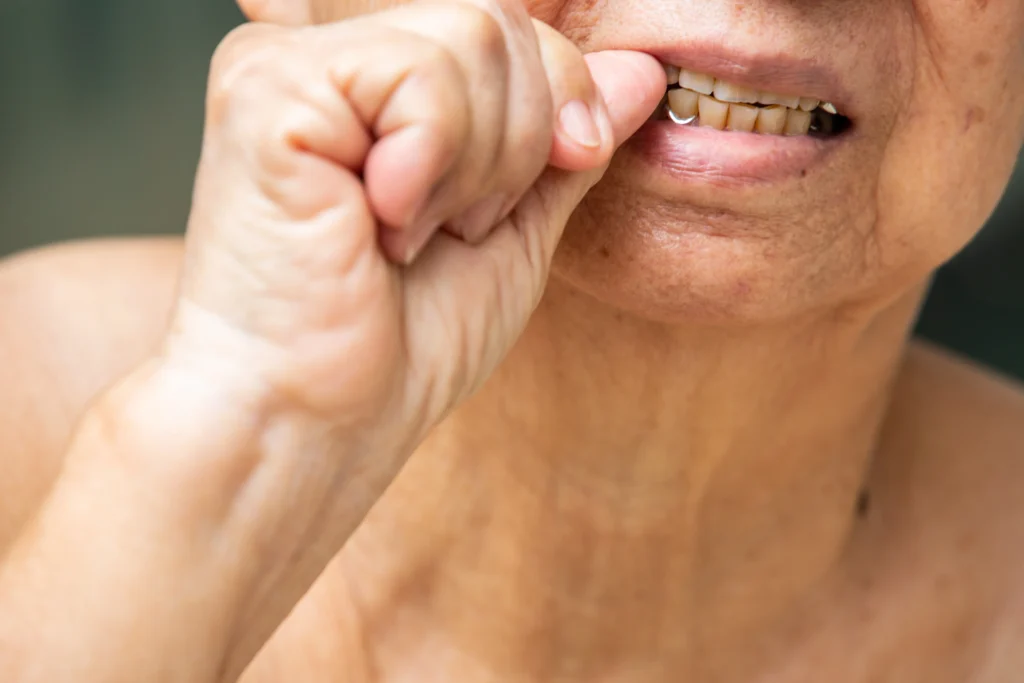
Caregivers wondering if rotten teeth can cause dementia are often also dealing with a second worry: “Is this behaviour a sign something hurts?” In many cases, dementia picking at teeth is the body’s version of a warning light. The goal is to intervene before the warning becomes a crisis.
1. Intervene Immediately If There Are Safety Red Flags
Treat dementia picking at teeth as urgent if you notice:
- Facial swelling, especially on one side
- Fever, chills, or sudden lethargy
- Pus, drainage, or a bad taste the person keeps reacting to
- Trouble swallowing or drooling that is new
- A tooth that looks broken with visible bleeding
These signs can point to infection or a serious dental problem that should not wait.
2. Intervene Soon If The Behaviour Is New Or Escalating
Book an evaluation soon if:
- Dementia picking at teeth started within the past week
- The person is picking hard enough to injure gums or loosen a tooth
- Eating becomes slower, more selective, or painful
- Brushing suddenly becomes impossible after previously being tolerated
A new behaviour is often the clearest clue that something changed physically.
3. Intervene If It Is Causing Daily Disruption
Even if there is no visible swelling, the behaviour matters if it is affecting quality of life, such as:
- Sleep disruption from mouth rubbing or picking
- Constant removal of dentures
- Refusing meals, even soft foods
- Increased agitation around hygiene or caregiving tasks
If dementia picking at teeth is interfering with comfort, it is time to step in.
A Calm, Caregiver Friendly Check You Can Do Today

If dementia picking at teeth is happening daily, caregivers can run a quick, low stress check that helps decide next steps. The goal is not a perfect mouth exam. The goal is to identify patterns that point to pain, infection, or denture irritation.
1. Observe Before You Touch
- When does picking happen most, morning, meals, evening, or bedtime?
- Is the person calmer when the environment is quiet?
- Do they pick on the same side every time?
2. Watch Eating For Clues
- Do they avoid crunchy foods that used to be fine?
- Do they chew only on one side?
- Do they hold food in their cheek?
Eating changes are one of the most reliable signals that dementia picking at teeth may be driven by discomfort.
3. Look For Visible Clues Only If It Is Safe
If the person tolerates it, use a bright light and look briefly for:
- Red or swollen gum tissue near one tooth
- A dark tooth, chip, or fragment
- A sore spot where dentures rest
- Bleeding that appears with minimal contact
If the person becomes distressed, stop. Forcing an exam can make future care harder.
Common Triggers And What To Do Next

Here is a simple table that helps caregivers connect triggers to actions. It is designed for real life, not perfect conditions.
| What You See | What It Often Means | What Helps Next |
| Picking increases during meals | Tooth sensitivity, cracked tooth, sore denture spot | Switch to soft foods temporarily and schedule evaluation |
| Picking targets one exact tooth | Local pain, decay, gum infection | Ask for a dental visit and note the side and tooth area |
| Dentures are removed repeatedly | Fit change, pressure sore, trapped debris | Remove dentures for comfort breaks and assess tissue |
| Picking worsens at sundown or with noise | Anxiety, sensory overload, restlessness | Reduce triggers and still rule out mouth pain |
| Picking causes bleeding | Gum injury, sharp edge, infection | Treat as urgent and request care promptly |
If rotten teeth worsening dementia is the worry, this table helps shift the focus to what is actionable: pain control, infection prevention, and restoring comfort.
Dementia Picking At Teeth In Assisted Living Or Memory Care
Dementia picking at teeth is common in care communities because routines change, staff rotate, and subtle discomfort can be missed until it becomes behavioural. Families often notice it during visits, then feel stuck because appointments outside the facility are hard to coordinate.
For residents in senior communities, Dental Home Services supports assisted living facilities with mobile care, which can reduce delays and prevent stressful transportation. This is often the difference between catching a sore denture spot early and dealing with a full blown infection later.
What A Dental Visit Can Actually Solve
Caregivers sometimes worry that an evaluation will automatically mean a major procedure. In reality, the goal is often simple: identify what is driving discomfort and remove barriers to eating, sleeping, and hygiene.
Dental Home Services outlines the range of support available through its services page, which helps families understand what can be done during a mobile visit and what may require additional planning.
If the person’s behaviour suggests serious pain or infection, the care plan may involve urgent treatment. If not, it may be as simple as smoothing a sharp edge, addressing gum irritation, or adjusting dentures.
Tooth Extraction Concerns When Dementia Is Involved

Sometimes dementia picking at teeth is linked to a tooth that cannot be saved. That possibility scares caregivers, especially when the person struggles with aftercare or cannot follow instructions.
For a clear overview of what caregivers should watch for, including eating, hygiene, and comfort strategies, Dental Home Services provides guidance on tooth extraction dementia care. In many cases, strong planning and caregiver support make recovery safer and less stressful.
NJ And NY Caregivers: You Don’t Have To Guess
If dementia picking at teeth is happening alongside eating changes, denture refusal, or new agitation, it is worth booking an evaluation now. Caregivers can request a home visit through the Dental Home Services contact page or call 1-800-842-4663. When transportation is the barrier, home dental visits reduce stress and help families act sooner.
For families who want extra reassurance before scheduling, Dental Home Services shares patient experiences and outcomes on its reviews page.
A Better Ending Than A Bigger Emergency
Dementia picking at teeth can be a small habit, or it can be a signal. The safest approach is to assume the mouth may be uncomfortable and work through the likely causes. When the behaviour is new, escalating, or tied to eating changes, the priority is ruling out pain and infection quickly. When care is brought to the home or community setting, it becomes easier to intervene earlier, protect nutrition, and reduce avoidable distress for everyone involved.
Frequently Asked Questions About Dementia Picking At Teeth
Is dementia picking at teeth always a dental problem?
Not always. It can be driven by anxiety, sensory overload, or repetitive self soothing. However, because dental pain can be hard to express in dementia, it is smart to rule out oral causes first.
What are the most common dental causes of picking at teeth?
Common causes include tooth decay, gum inflammation, infection, denture sore spots, cracked teeth, and dry mouth discomfort.
What if the person will not let anyone look in their mouth?
Do not force it. Use pattern clues instead, such as changes in eating, one-sided chewing, sudden denture refusal, or behaviour changes during brushing. Then arrange an evaluation with a team experienced in dementia care.
When should caregivers treat this as urgent?
Urgent signs include facial swelling, fever, drainage, bleeding that does not stop, trouble swallowing, or rapid decline in eating and drinking.
How can Dental Home Services help with dementia picking at teeth?
Dental Home Services provides mobile dental care for homebound seniors and patients in care communities. To book an appointment or ask a question, Dental Home Services can be contacted for a home visit in all of New Jersey and parts of New York.
Disclaimer
This article is for general educational purposes only and is not medical or dental advice. Dementia symptoms and dental conditions can change quickly and may require urgent evaluation. If there is facial swelling, fever, difficulty swallowing, uncontrolled bleeding, or a rapid decline in condition, seek emergency medical care immediately. For personalised guidance, consult a licensed dentist, physician, or qualified healthcare professional.