
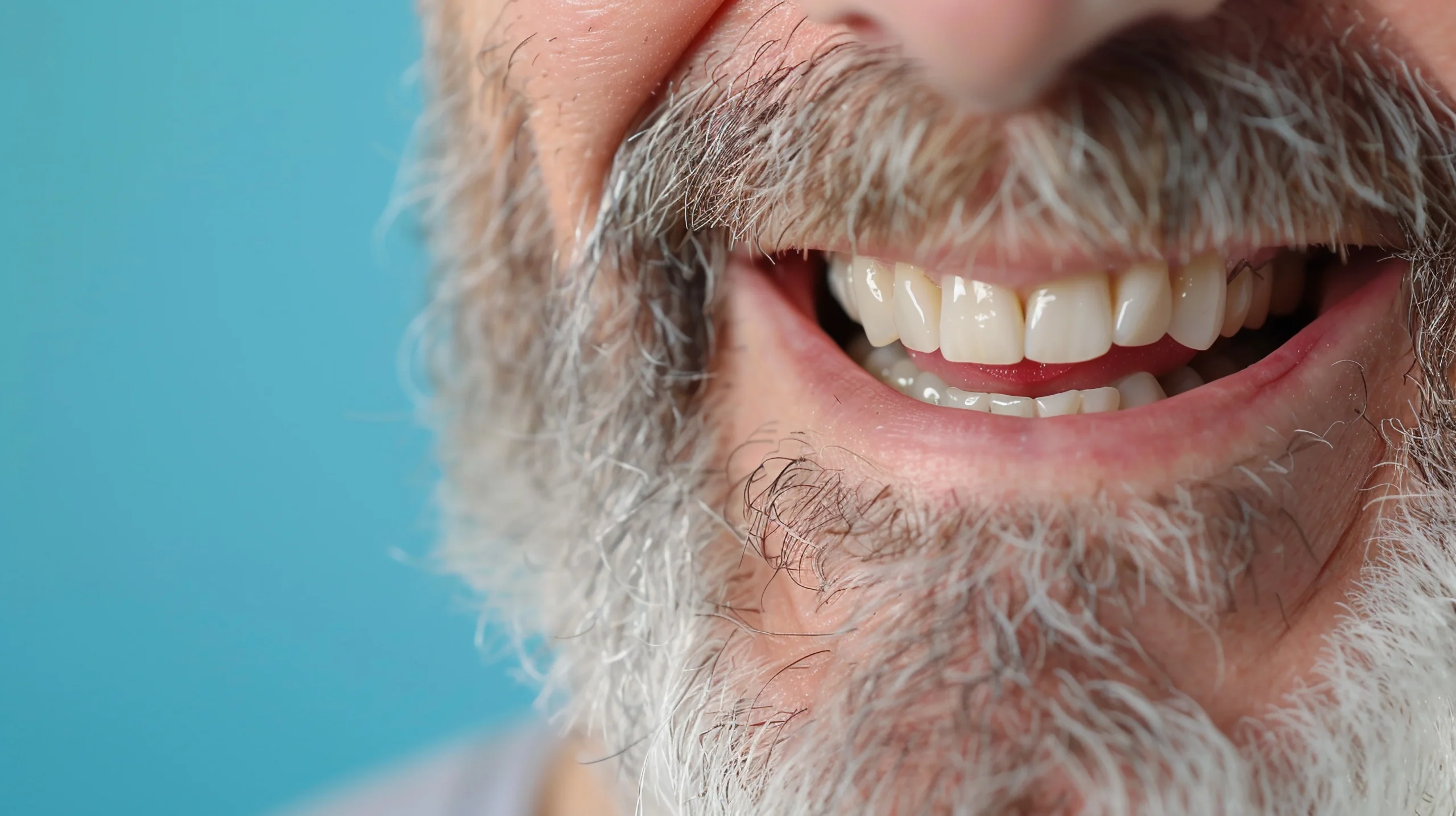
Missing teeth change more than a smile. They change meals, confidence, speech, and how “normal” a day feels. Learning the types of partial dentures helps families choose an option that fits the person’s health, lifestyle, and comfort, especially for seniors who cannot easily get to a traditional office.
If a loved one is homebound or needs a calmer pace, Dental Home Services can help families talk through types of partial dentures during an at-home visit request through the contact page.
When caregivers start researching types of partial dentures, it helps to anchor the basics first. As MedlinePlus puts it, “Dentures are false teeth made to replace teeth you have lost.” That includes partials, which replace some teeth while natural teeth remain. Once that foundation is clear, the different types of partial dentures become much easier to compare.
Types of Partial Dentures and Who They Fit Best
There is no single “best” choice for everyone. The right types of partial dentures depend on how many teeth are missing, where they are missing, and what the remaining teeth can support.
Before diving into the different types of partial dentures, it helps to sort the decision into a few practical questions.
Key questions to ask first
- How many teeth are missing, and where are the gaps?
- Are the remaining teeth stable enough to support a partial?
- Does the person tolerate appliances in the mouth well?
- Is the priority durability, appearance, or easy repairs?
- Is this a short-term solution while planning something else?
When families want a bigger picture view of what the practice provides beyond dentures, the services page is a useful starting point because it shows how care is adapted for home visits and senior needs.
Different Types of Partial Dentures Explained in Plain English
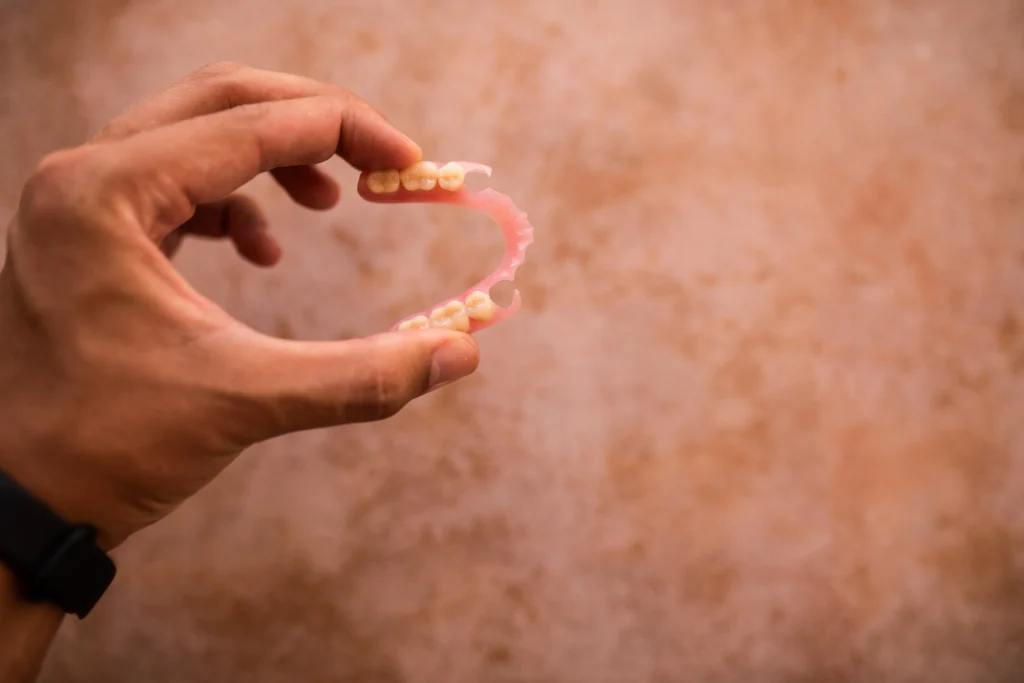
Caregivers often hear a lot of vocabulary quickly. This section breaks the different types of partial dentures into clear categories, using the same kinds of options Dental Home Services sees most often in NJ and NY.
1. Acrylic Partials
Acrylic partials are often used as a practical starter option. They can be faster to make and may be used when a person needs something temporary or transitional. These types of partial dentures can be helpful when a mouth is still changing or when someone needs a simpler entry point.
What families usually like about acrylic partials
- Often a cost effective option
- Can be relined if the fit changes due to weight loss
- Can be easier to modify in some cases
When comfort changes over time, the most important thing is not “toughing it out.” It is getting the fit corrected. Many soreness issues can be improved through denture care support like denture adjustments when the appliance starts rubbing or shifting.
2. Cast Metal Framework Partials
These types of partial dentures use a metal framework for strength and stability. They are designed to fit precisely and can feel more secure for some wearers.
Why some seniors prefer them
- Often feels thinner and more stable
- Can last longer with good care
- May distribute chewing forces more evenly
Common concerns
- Metal components can be more visible in some designs
- Repairs and modifications may require professional support and laboratory involvement
If something breaks, chips, or no longer sits correctly, denture repairs can be the difference between a minor fix and weeks of eating difficulty.
Types of Removable Partial Dentures and How They Stay Put
Many families specifically search for types of removable partial dentures because removability feels practical. It is easier to clean. It is easier to take a break if the mouth is sore. It also makes ongoing maintenance realistic for caregivers.
A helpful way to picture types of removable partial dentures is to focus on the “how it connects” question.
Common retention methods
- Clasps that grip natural teeth
- Precision attachments that connect more discreetly
- Flexible connectors in some designs
The Dentures Partial guide from MouthHealthy explains removable partial dentures as replacement teeth attached to gum-coloured bases, sometimes with a metal framework and clasps, and sometimes with more natural-looking connectors or precision attachments. That description matches what many caregivers see in real life: the design depends on the person’s mouth and priorities.
To keep expectations clear, it also helps to understand the broader denture categories. The main dentures page is a good internal hub for families who want to compare partials with other options without getting lost.
Types of Flexible Partial Dentures and When They Help
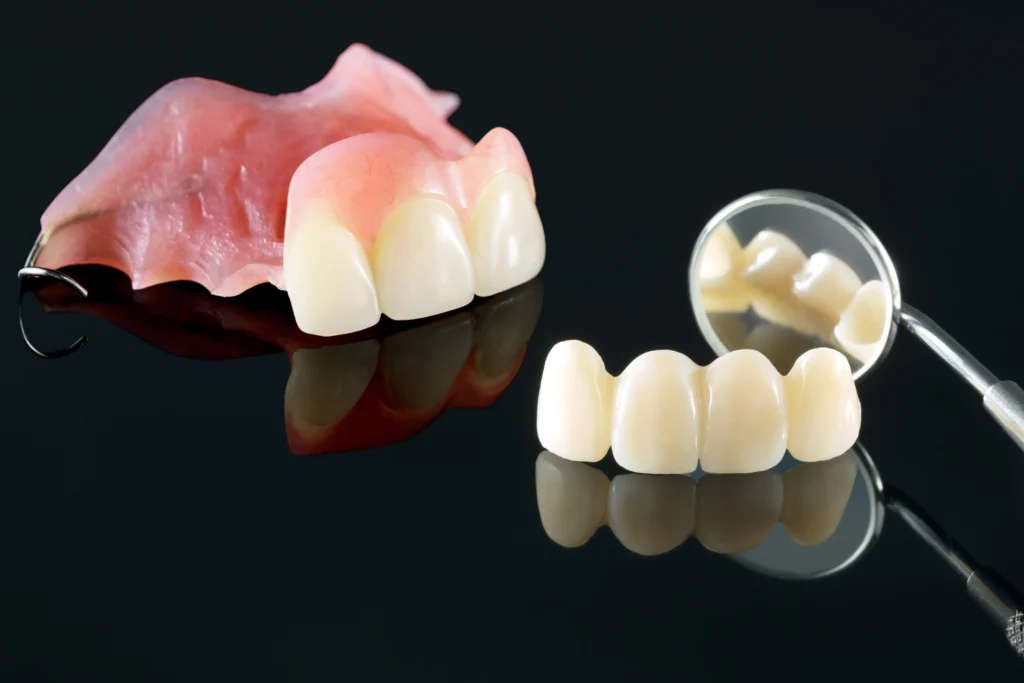
Types of flexible partial dentures are usually made with materials designed to bend slightly rather than using a rigid metal framework. For some patients, this can feel more comfortable. For others, it may not provide the stability they want.
When flexible options may be worth discussing
- Sensitive gums or sore spots with rigid components
- Preference for less visible metal
- Need for a lighter-feeling appliance
What caregivers should know
- Fit still matters, even with flexibility
- Cleaning is still essential
- Comfort does not always equal stability
If a partial needs extra hold, some families ask about adhesives. Dental Home Services has practical caregiver-friendly guidance on adhesive paste for dentures and adhesive glue for dentures so families can understand what is normal, what is too much, and what may signal a fit problem instead.
If a caregiver is asking, “What can I use instead of denture glue?” The answer often depends on why the denture is moving in the first place. This is where the guide on what can I use instead of denture glue can help families think through alternatives while still protecting comfort.
Types of Upper Partial Dentures and What Changes Up Top
Types of upper partial dentures come with their own practical considerations because the upper arch affects speech, taste, and how the tongue moves. Some seniors describe an upper partial as “more noticeable” at first, simply because it changes what the mouth senses.
What families often notice with types of upper partial dentures
- Speech may sound different for a short period
- A bulky feel can increase gag sensitivity
- Chewing may feel “uneven” until adaptation happens
Ways to make adaptation easier
- Start with softer foods and smaller bites
- Use calm repetition with simple encouragement
- Practice speaking slowly with familiar words
If the person is missing many teeth in the upper arch, caregivers sometimes ask whether a partial is still the best route. In those situations, comparing types of partial dentures to a full option can reduce confusion. The complete dentures page can help families understand when full dentures may be discussed instead of partials.
Types of Partial Dentures for Front Teeth and Confidence
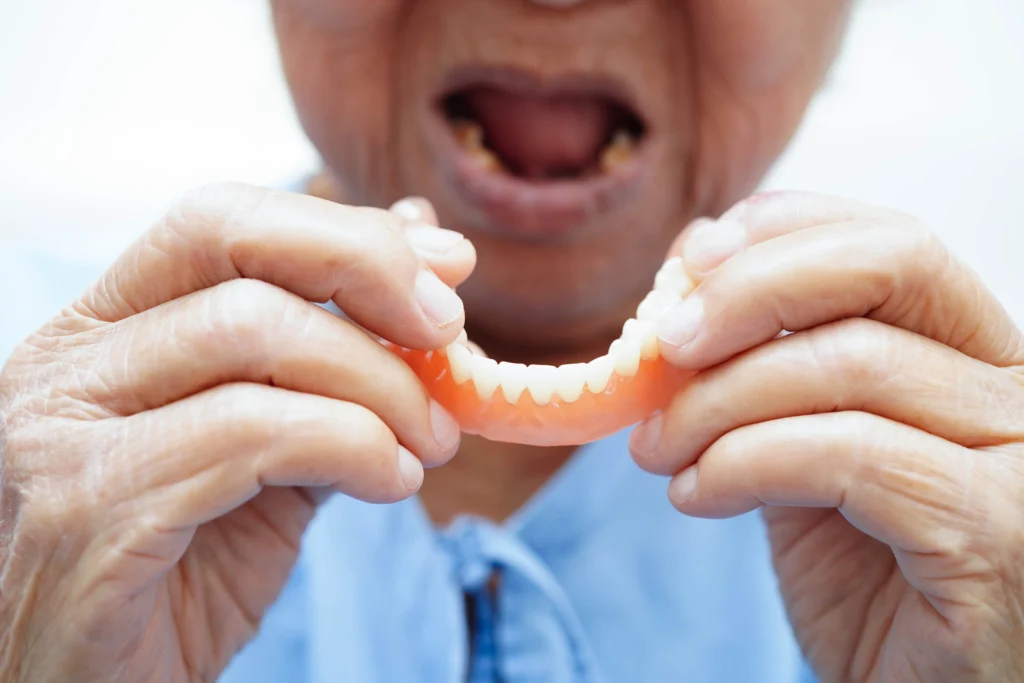
Types of partial dentures for front teeth often come with one big priority: appearance. Front-tooth gaps are visible when speaking, smiling, and even eating. Some find this can be embarrassing. That visibility can make some seniors withdraw socially. The goal is to restore function and confidence in a way that still feels natural.
What matters most with types of partial dentures for front teeth
- Colour matching
- Tooth shape and spacing
- How the appliance supports lip shape
- How it sits during speaking
A good fit is not just about comfort. It is also about reducing “self-conscious moments” that keep someone from engaging with family. That is one reason Dental Home Services approaches care through a geriatric lens, explained more fully on the geriatric dentistry page.
Types of Partial Dentures vs Full Dentures
Families often compare types of partial dentures with full dentures because they want the simplest solution. The real decision is usually about what is still healthy in the mouth.
A quick comparison table can make this easier.
| Feature | Types of Partial Dentures | Full Dentures |
| Natural teeth remain | Yes | No |
| Purpose | Replace some missing teeth | Replace all teeth in an arch |
| Support | Often uses remaining teeth | Rests on gums |
| Cleaning | Remove and clean daily | Remove and clean daily |
| Fit changes | Can shift as natural teeth change | Can shift as gums change |
Some seniors will do best with partials. Others may need a full option. Some may move from partial to full over time. That is not failure. That is normal aging plus changing oral health.
If the partial is mainly used as a removable appliance, families may also benefit from reading the removable dentures page to see how daily care and fit expectations apply across removable options.
Cleaning Matters for Every Option
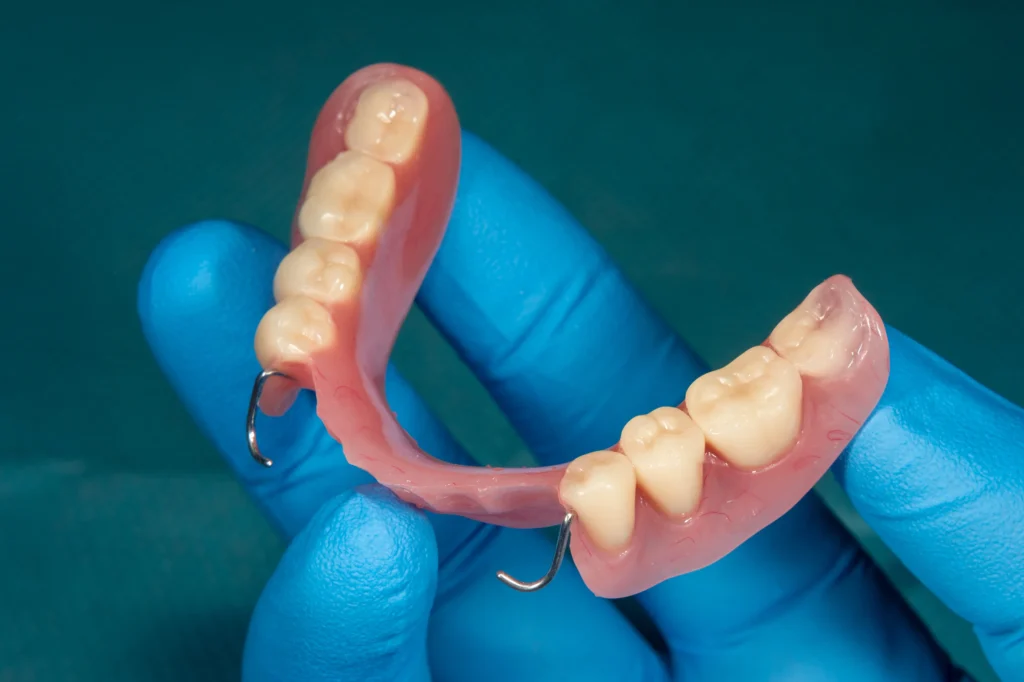
No matter the materials, the types of partial dentures that work best are the ones that stay clean and comfortable. If a caregiver is managing oral care, it helps to treat cleaning like a routine, not a project that only happens “when there is time.”
A simple daily routine
- Rinse after meals when possible
- Clean the appliance at the same time each day
- Check the gums for irritation
- Store it safely to avoid damage
For practical denture hygiene support, the cleaner for dentures guide gives families a clear approach that is easier to stick to.
When the Fit Changes, the Plan Should Change Too
This is where many families get stuck. They assume discomfort is “part of dentures.” It does not have to be.
Common signs the types of partial dentures need attention
- New sore spots
- Clicking or rocking during chewing
- Food trapping in new areas
- Increased use of adhesives to “make it work”
- The person stops wearing it entirely
When any of those show up, it is time to plan a check rather than pushing through. Dentures that do not fit well can also increase frustration for seniors who already feel tired of appointments.
If a caregiver wants reassurance from other families who have used home visits, the reviews page can help set expectations for what a supportive experience can look like.
A Simple Food Strategy While Adjusting to Partial Dentures
Some seniors give up too early because eating feels awkward. A better approach is to use a “soft start” plan and gradually build confidence.
Start with foods that are easy to manage
- Scrambled eggs
- Yogurt and soft fruit
- Oatmeal
- Soups that are not too hot
- Tender fish
- Cooked vegetables
Then build toward firmer textures as comfort improves. The right types of partial dentures should help eating feel easier, not harder, once the fit is correct.
NJ and NY Caregivers: Getting Help Without the Stress Spiral
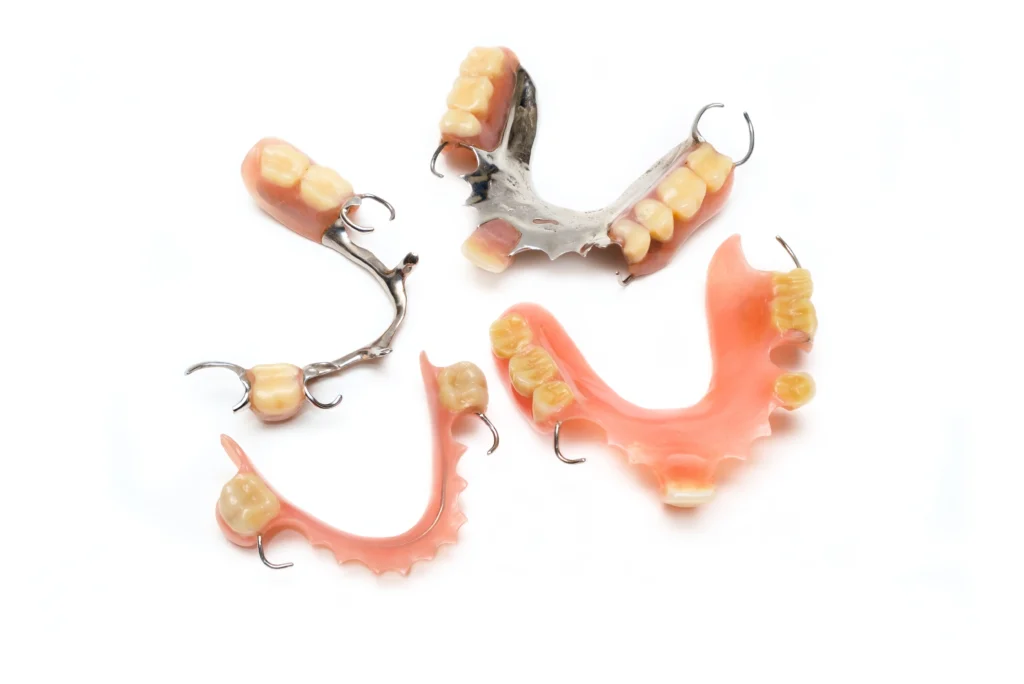
Seniors who need dentures often need more than a device. They need patience, reliable follow up, and clear steps. Types of partial dentures are easier to live with when families have support that meets them where they are.
Dental Home Services is a mobile practice serving NJ and NY. More details on how visits work can be found on the Dental Home Services homepage without forcing families into extra travel during an already stressful season of care.
Ready for a calmer plan?
If types of partial dentures are coming up because eating changed, confidence dropped, or an appliance keeps rubbing, it is worth asking for guidance now. Families can request an appointment through the Dental Home Services contact page or call 1-800-842-4663. A small conversation can prevent weeks of discomfort.
Frequently Asked Questions About Types of Partial Dentures
What are the different types of partial dentures, and how do families choose?
The different types of partial dentures typically include acrylic options, cast metal framework designs, and flexible designs. Selection depends on comfort needs, durability goals, and how remaining teeth can support the appliance.
What are the main types of upper partial dentures?
Types of upper partial dentures often need special attention to speech and comfort because the upper arch affects how the tongue and palate feel during talking and eating. A precise fit and a gradual adjustment plan usually matter most.
Are there specific types of partial dentures for front teeth?
Yes. Types of partial dentures for front teeth often prioritize appearance, including natural tooth shape, spacing, and colour match, because those teeth show during speech and smiles.
What are the most common types of removable partial dentures?
Types of removable partial dentures may use clasps, connectors, or precision attachments. Mouth design, stability needs, and caregiver cleaning routines help determine what fits best.
What are types of flexible partial dentures best for?
Types of flexible partial dentures may help patients who want fewer visible metal components or prefer a softer feel. They still require daily cleaning and fit monitoring.
Can a partial denture be adjusted or repaired if it starts hurting?
Yes. Many soreness issues can improve with adjustments, and damage can often be repaired. The key is to avoid “forcing” wear through pain and instead plan a fit check.
How do families schedule an at-home denture visit in NJ or NY?
Families can contact Dental Home Services to ask about home visits, denture support, and scheduling in NJ and NY.
Disclaimer
This article is for general educational purposes only and does not provide medical or dental advice. Denture needs and oral health conditions vary by person. For diagnosis and treatment recommendations, consult a licensed dentist or qualified healthcare professional. If there is severe oral pain, swelling, fever, difficulty swallowing, or signs of infection, seek urgent medical care.