

A denture can look great on day one and still feel “off” a month later if the materials are not a good match for the person’s bite, habits, and daily care routine. That is why materials used in high-quality full dentures matter more than most families realise, especially when someone is older, homebound, or needs a calmer, more familiar setting for care. Dental Home Services supports seniors and homebound adults across New Jersey and parts of New York with mobile dental care that fits real life.
If a denture question is turning into a daily frustration, it can help to request an in-home visit and get clear, practical guidance in the place where the denture is actually being used.
One helpful reminder from research is that the “hardest” option is not always the safest option for wear. An in vitro study in PubMed Central notes: “Porcelain as an antagonist material caused the highest wear.” That is one reason clinicians focus on compatibility, not just strength, when discussing materials used in high-quality full dentures.
Materials Used In High-Quality Full Dentures and Why “Compatibility” Comes First
When families ask about materials used in high-quality full dentures, they often want a simple answer like “porcelain is best” or “acrylic is best.” In reality, the best choice depends on what the denture will bite against, how strong the chewing forces are, and how easy daily care needs to be.
The same PubMed Central study highlights a practical principle: choosing compatible opposing materials can help reduce wear and support longer-term stability. In plain language, dentures should be designed like a matched set, not like two unrelated products.
Dentures are also not a single material. A “full denture” is a system with:
- A base that rests on gums
- Artificial teeth attached to the base
- Fit, bite, and edges that determine comfort
- Optional liners or adhesives depending on the situation
For a broad overview of options, the dentures page can help families understand common terms before they start comparing materials.
The Two Main Parts That Define Materials Used In High-Quality Full Dentures
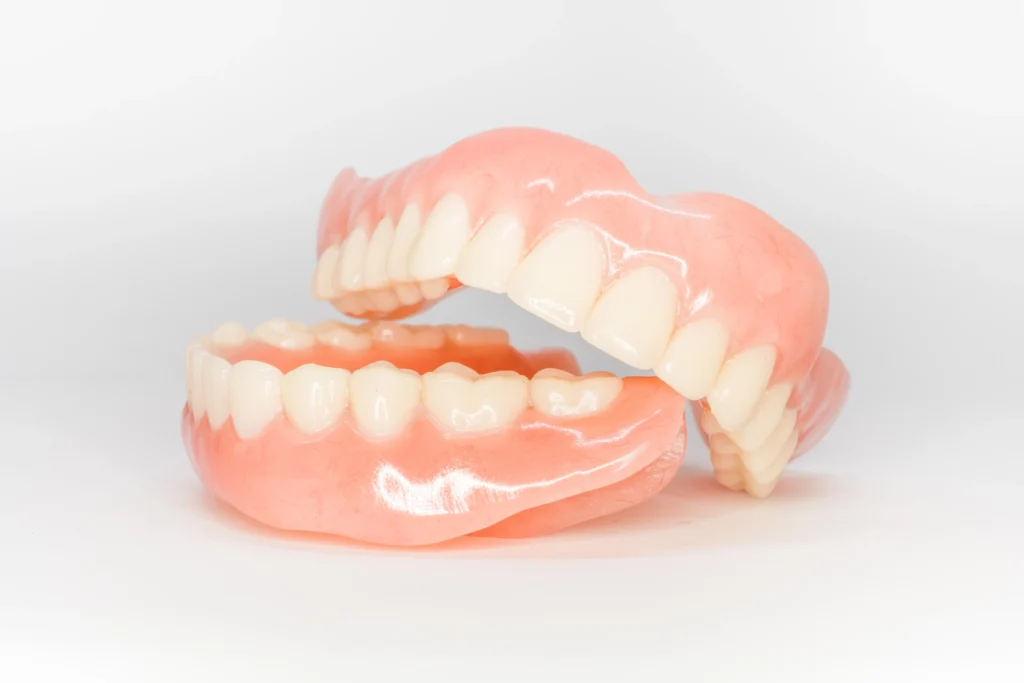
High-quality full dentures are usually judged by how they fit, how they feel, and how well they hold up in everyday use. The materials matter most in two places.
1. The Denture Base Material
The base is the “pink” part that sits on the gums. It needs to be strong enough to function, but also shaped precisely enough to reduce sore spots.
In many cases, bases are made from acrylic resin because it can be adjusted and repaired more easily than some alternatives. That matters if a person’s mouth changes over time, which is common with aging.
When a family is deciding between denture types, it helps to review the differences between complete dentures and other approaches, because design and coverage affect comfort as much as materials do.
2. The Artificial Tooth Material
The “teeth” portion is where wear and bite stability become a long-term issue. This is also where the study you shared becomes useful. It suggests porcelain opposing surfaces can increase wear on certain artificial tooth materials in removable dentures.
That does not mean porcelain is “bad.” It means the dentist should be thoughtful about what it will wear against, especially in a removable appliance where long-term wear can change how the bite feels.
For people who need removable options, the removable dentures guide can help clarify what “removable” really means day to day, including what to expect with fit changes.
A Practical Table of Materials Used In High-Quality Full Dentures
This table keeps things simple for caregivers and denture wearers who want a quick mental map.
| Denture Component | What It Needs to Do | Why Material Choice Matters |
| Base | Fit comfortably on gums and stay stable | Affects comfort, fracture risk, and how easily it can be adjusted |
| Teeth | Hold bite shape and resist wear | Affects chewing feel, long-term bite stability, and wear against opposing surfaces |
| Liner (sometimes) | Add cushioning for sensitive tissues | Affects comfort and hygiene routines |
| Adhesive (sometimes) | Support retention when fit changes | Affects confidence, eating, and caregiver ease |
| Repair materials | Restore function after damage | Affects how quickly the denture can return to daily use |
This is why materials used in high-quality full dentures should always be discussed with the person’s real routine in mind, not just a brochure description.
What the Research Suggests About Wear and Long-Term Bite Stability
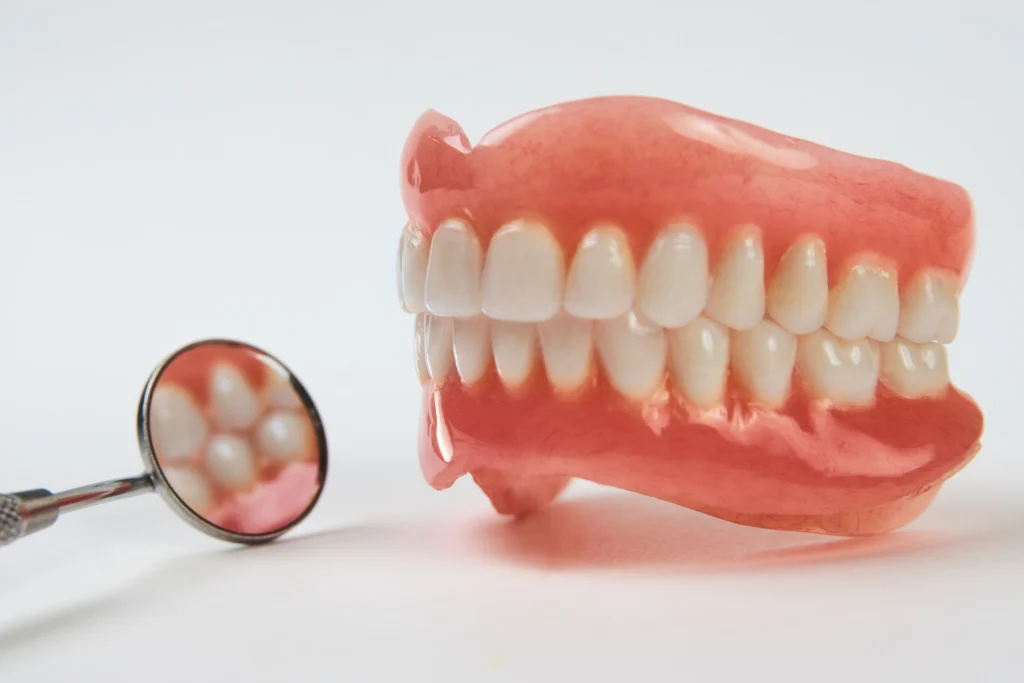
People often think denture wear is only about how the denture wears down. The bigger issue is that wear can change the bite relationship over time.
The PubMed Central study referenced earlier suggests three useful clinical implications:
- Porcelain opposing surfaces produced the highest wear on some artificial tooth materials, so clinicians should use caution in removable dentures.
- Two artificial tooth materials in the study showed similar wear resistance, meaning more than one option may be viable depending on the person’s needs.
- Using the same material bilaterally tended to reduce wear, which may help maintain occlusal stability over time.
For caregivers, the takeaway is simple. Materials used in high-quality full dentures are not just about durability. They are about keeping the bite predictable, so the person can eat comfortably and avoid the slow creep of soreness and imbalance.
Materials Used In High-Quality Full Dentures and Why Adjustments Matter
Even the best materials cannot compensate for a bite that is slightly off. Small high spots can create big irritation, especially in older adults with sensitive tissues.
That is why planned follow-ups matter. If the denture starts feeling uneven, rubbing, or “too tall,” it may need a professional tweak. The page on denture adjustments is helpful for understanding what an adjustment is and why it is often a normal part of success, not a sign of failure.
When a denture breaks, material choice affects repair options, too. The denture repairs page can help families understand what can often be fixed and why quick action is important.
Cleaning Habits That Protect Materials Used In High-Quality Full Dentures
A denture can be made from excellent materials and still degrade faster if cleaning methods are too harsh or inconsistent. Many families do not realise that some “strong” cleaners can scratch surfaces, which can trap plaque and odours over time.
For simple, caregiver-friendly cleaning approaches, these resources can help:
- Cleaner for dentures for daily product basics and routines
- False teeth cleaning solution for practical guidance on what to use and what to avoid
If mouth dryness is part of the person’s day, it can increase irritation and make dentures feel less comfortable. The link between dryness and oral comfort often shows up alongside questions like “How quickly do cavities form?” The guide on how quickly cavities form can help families understand why routine shifts can change oral health faster than expected.
Adhesives and Alternatives Without Guesswork
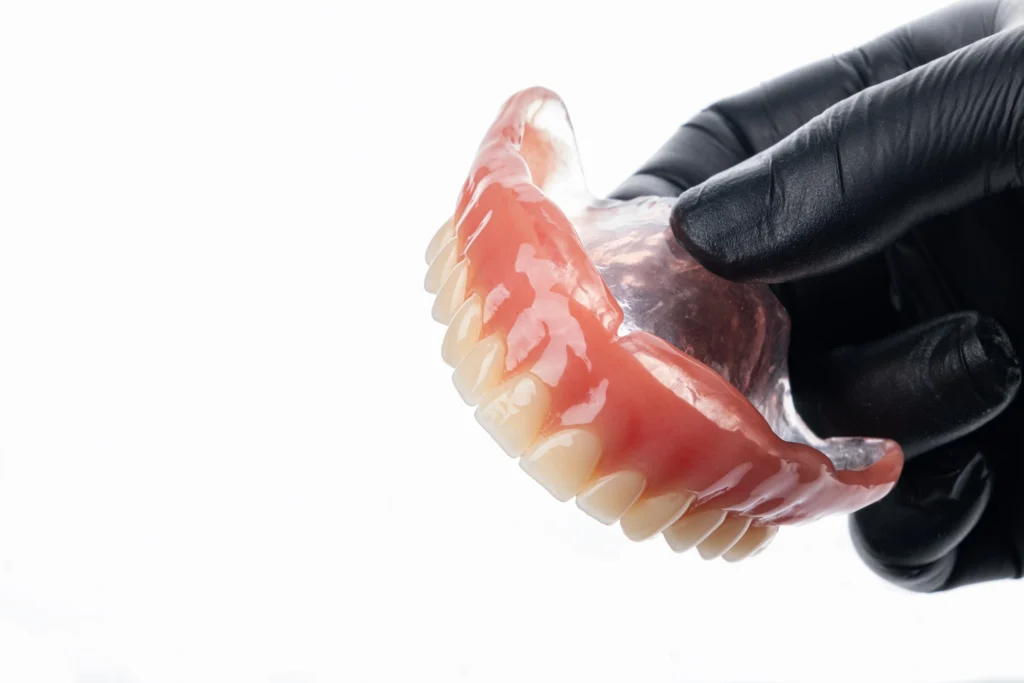
Adhesives can be helpful when used correctly, but they should not be used to “mask” a fit problem that needs attention. If a denture suddenly needs much more adhesive than before, it is a sign the fit may have changed.
For people who do use adhesive, these pages can help caregivers make more informed choices:
- Adhesive glue for dentures for practical use and expectations
- What can be used instead of denture glue for alternatives that may fit certain routines better
These details matter because materials used in high-quality full dentures include not only what the denture is made of, but also what is routinely used on it.
Materials Used In High-Quality Full Dentures for Patients With Dementia
Caregiving changes denture care. A person with dementia may remove dentures repeatedly, hide them, bite down unexpectedly during cleaning, or resist removal because the process feels unfamiliar.
That is why the most “ideal” material choices on paper still need to fit the reality of safe handling. The guide on how to remove dentures from a dementia patient offers caregiver-focused strategies for reducing risk and conflict.
If the person shows signs of oral pain but cannot describe it clearly, that can affect how dentures are worn and tolerated. The page on dementia and tooth pain can help caregivers recognise behavioural clues that may point to soreness, pressure points, or underlying dental issues.
Why In-Home Denture Support Can Make Denture Material Choices Work Better
The best denture material plan is only as good as the follow-through. For many families, transport, fatigue, and confusion make office visits hard. That is where mobile dental care can reduce friction.
Dental Home Services explains its approach on the services page, including support for seniors and homebound patients who need care in a more familiar environment. For families who want reassurance from other households, the reviews page can offer real-world perspective on what in-home visits are like.
If the caregiver wants ongoing education, it can also help to browse the main blog for related denture care topics and practical guidance.
For immediate questions about dentures, appointments, or logistics, calling 1-800-842-4663 can be a straightforward next step.
A Better Way to Think About Materials Used In High-Quality Full Dentures
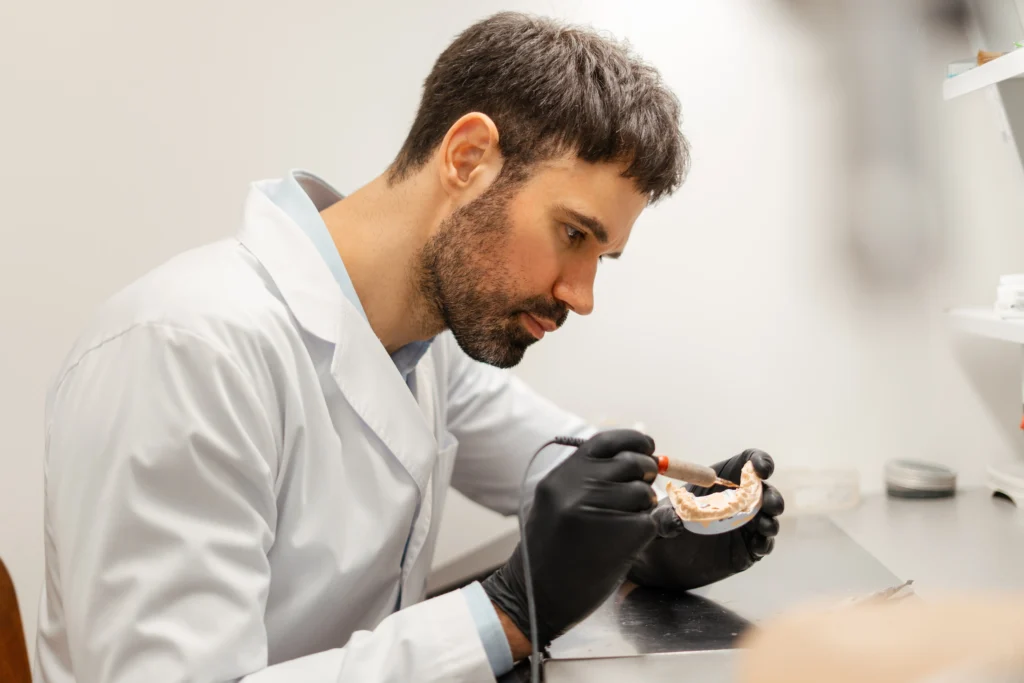
A “high-quality” denture is not defined by one premium material. It is defined by a smart match between materials, bite design, and the person’s day-to-day reality.
The most helpful mindset is this:
- Choose materials that work well against the opposing arch
- Plan for adjustments as a normal part of comfort
- Use cleaning products that protect surfaces
- Build caregiver-friendly routines if cognition is changing
When those pieces line up, materials used in high-quality full dentures stop being a confusing list and become a plan that supports eating, comfort, and confidence.
Frequently Asked Questions About Materials Used In High-Quality Full Dentures
What Are the Main Materials Used In High-Quality Full Dentures?
Most full dentures involve a base material and an artificial tooth material. The best choice depends on bite forces, comfort needs, and what the denture will wear against over time.
Do Harder Tooth Materials Always Mean Better Dentures?
Not always. Some opposing materials can increase wear on artificial teeth in removable dentures. Material compatibility across arches is often more important than picking the “hardest” option.
Why Do Dentures Need Adjustments Even if the Materials Are High Quality?
Fit and bite balance change as the mouth changes and as the denture settles into daily use. Small high spots can cause irritation, and adjustments can restore comfort without replacing the denture.
What Cleaning Products Are Safest for Denture Materials?
The safest approach is usually consistent daily cleaning with products designed for dentures, plus avoiding harsh abrasives that can scratch surfaces and trap odours over time.
How Should Caregivers Handle Dentures for Someone With Dementia?
Caregivers should use calm routines, predictable timing, and safe removal techniques. If the person resists or clenches, it helps to use step-by-step strategies and speak with a professional about safer handling.
Who Can Help With Full Denture Care in New Jersey and Parts of New York?
Families can ask Dental Home Services about in-home denture care, adjustments, and guidance for seniors and homebound patients.
Dental Disclaimer for Materials Used In High-Quality Full Dentures
This article is for educational purposes only and does not provide medical or dental advice. For diagnosis or treatment recommendations, consult a licensed dental professional. If there is severe pain, swelling, fever, uncontrolled bleeding, or any urgent concern, seek emergency medical care right away.