

Deep cleaning teeth, clinically called scaling and root planing, is a non-surgical dental procedure used to treat gum disease. This is done by removing bacterial buildup from below the gumline. Unlike a routine cleaning, it targets the root surfaces of teeth where a standard polish cannot reach. If your dentist has recommended it, this article explains exactly what the procedure involves, what recovery looks like, and what happens if gum disease goes untreated.
Need help now? Call 1-800-842-4663 to speak with Dental Home Services about mobile dental care in New Jersey and parts of New York.
What Is a Dental Deep Cleaning?
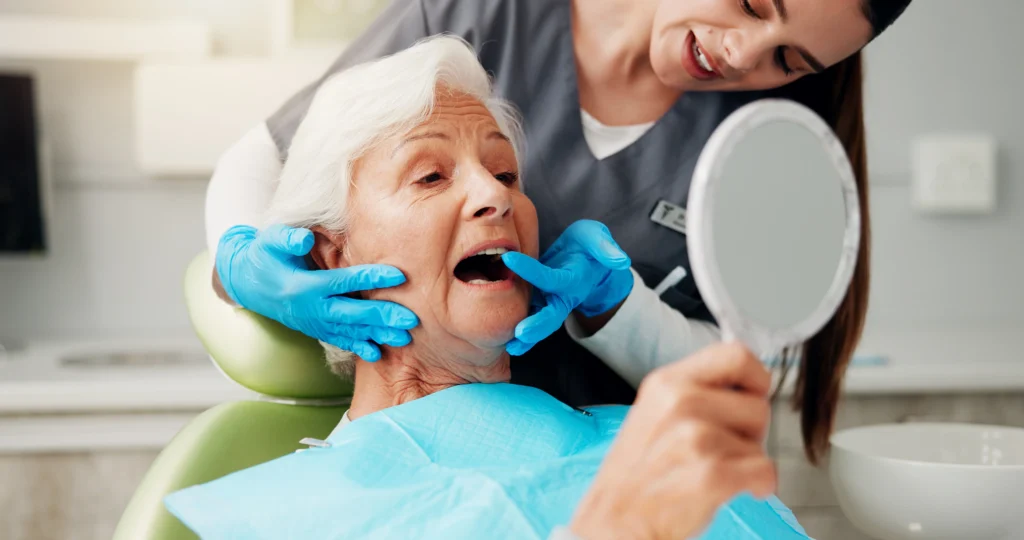
A dental deep cleaning is a two-part clinical procedure that removes plaque, tartar, and bacterial deposits from below the gumline, areas that a regular cleaning never touches. The procedure is also called scaling and root planing, and it is a treatment for gum disease, not a cosmetic service. It will not whiten your teeth or remove surface stains. Its purpose is clinical: to stop the progression of periodontal disease and protect the structures that hold your teeth in place.
Think of it this way: if a regular cleaning is like washing the surface of a window, a deep dental cleaning gets into the frame and sill where grime has built up over time and can’t be wiped away from the outside.
The clinical threshold that separates a routine cleaning from a deep cleaning is gum pocket depth. Healthy pockets measure 1–3mm; anything deeper signals active gum disease.
How Do You Know If You Need Deep Cleaning for Gum Disease?
Your dentist determines whether you need a deep cleaning primarily through periodontal probing — a simple measurement tool that assesses how deep the pockets between your teeth and gums have become. Pockets of 1–3mm are considered healthy. At 4mm and beyond, gum disease is present and deep cleaning below the gumline is typically recommended.
Research consistently shows that nearly half of adults over age 30 in the United States have some form of periodontal disease — so if you’ve received this recommendation, you’re far from alone.
Some patients notice warning signs at home before a dentist confirms the diagnosis. These include:
- Bleeding gums during brushing or flossing
- Persistent bad breath that doesn’t resolve with brushing
- Gum recession or teeth that look longer than they used to
- Loose or shifting teeth
- Visible tartar buildup along the gumline
- Red or swollen gum tissue — particularly gum swelling and inflammation between teeth — is one of the earliest visible signs
Some patients have no symptoms at all. X-rays and routine probing at a regular checkup reveal the problem before it becomes painful.
Plaque hardens into tartar within 24 to 72 hours of forming — once that calculus builds up below the gumline, no toothbrush or floss can remove it, and pockets deepen over time without professional intervention.
If you’ve been told you need this procedure and feel surprised or anxious, that reaction is normal. Many patients are. The diagnosis doesn’t mean you’ve failed at oral hygiene — it means the disease has progressed to a point where home care alone can no longer manage it.
What Happens During Scaling and Root Planing?

The scaling and root planing procedure follows a clear, predictable sequence — and knowing what to expect in advance makes the appointment significantly less stressful.
Step 1 — Local anesthetic. Before anything else, the treatment area is numbed. This is the most important comfort factor in the entire procedure. Most patients feel pressure during treatment but no sharp pain once the anesthetic takes effect.
Step 2 — Scaling. Using either manual scalers or ultrasonic instruments, the clinician carefully removes plaque and calcified tartar from the tooth surfaces and from below the gumline. Ultrasonic scalers use vibration and water irrigation to break apart deposits; manual scalers give the clinician precise tactile control. Both are clinically effective — the choice depends on the clinician’s preference and the patient’s sensitivity levels.
Step 3 — Root planing. Once the deposits are cleared, the root surfaces are smoothed. This step eliminates the microscopic rough spots where bacteria anchor themselves, reducing the likelihood of rapid re-colonization.
Step 4 — Rinse. The area is typically rinsed with an antimicrobial solution to reduce residual bacterial load.
Because treating the entire mouth at once would be lengthy and taxing, the mouth is usually divided into quadrants. Most patients complete the process over two appointments, each covering two quadrants. Each session runs approximately 1 to 2 hours depending on the extent of disease. A follow-up visit is then scheduled 4 to 6 weeks later to assess healing.
Does Scaling and Root Planing Hurt? What Recovery Looks Like
During the procedure itself, most patients experience minimal discomfort. The local anesthetic does its job — you may feel pressure or movement, but pain is not the norm. Patients who have postponed dental care due to fear of pain are often relieved at how manageable the experience actually is.
After the anesthetic wears off — usually a few hours after leaving the office — some soreness, gum tenderness, and sensitivity to hot and cold temperatures is expected. This is a normal inflammatory response, not a sign that something went wrong. Sensitivity is most pronounced in the first 24 to 72 hours and resolves within 1 to 7 days for the majority of patients.
Practical aftercare during recovery:
- Eat soft foods for the first 24 to 48 hours (yogurt, eggs, mashed vegetables, soup)
- Brush gently with a soft-bristle toothbrush
- Avoid very hot or cold beverages while sensitivity persists
- Use any prescribed antimicrobial rinse as directed
- Avoid smoking, which impairs gum healing significantly
Contact your dental provider if you experience excessive bleeding that doesn’t settle, swelling that worsens after 48 hours, or any signs of infection such as fever or discharge. These situations are uncommon but warrant prompt attention.
Your follow-up appointment at 4 to 6 weeks is not optional — it’s where your provider re-measures pocket depths to assess healing and determines whether additional treatment is needed.
Deep Cleaning When Getting to a Dental Office Isn’t Easy
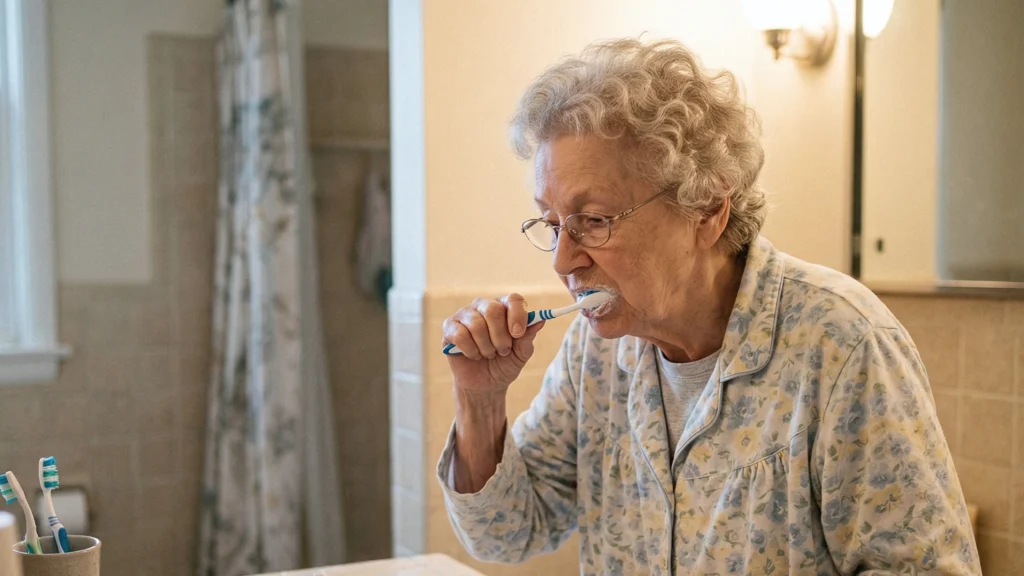
Gum disease does not skip people who have mobility limitations, cognitive conditions, or complex care needs. These individuals are often at higher risk precisely because regular preventive dental visits are harder to maintain consistently.
Qualified dental professionals equipped with portable dental units can deliver professional home dental services, bringing clinical-grade periodontal treatment — including deep cleaning below the gumline — directly to a patient’s home, assisted living facility, or care setting. This is not a compromise; portable dental technology has advanced to the point where the quality of care matches what’s delivered chairside in a conventional office.
Gum disease prevalence increases with age and is significantly higher among adults managing chronic health conditions. For homebound patients or those with dementia, where standard oral hygiene routines may already be difficult to maintain, professional periodontal care brought to them is a clinical necessity.
| Patient Situation | Standard Office Visit | Home-Visiting Dental Care |
| Fully mobile adult | Accessible and routine | Optional convenience |
| Elderly patient with limited mobility | Difficult or requires assistance | Eliminates transportation barrier |
| Patient with dementia | Often avoided or inconsistent | Familiar environment reduces distress |
| Medically complex or homebound | May be impossible | Clinically appropriate alternative |
| Post-surgical or recovering patient | Timing may be impractical | Care comes to the patient |
If you are a caregiver or family member looking for periodontal care options for a loved one who cannot easily visit a traditional office, know that this option exists and is available in New Jersey and parts of New York.
If you or a loved one has been told a deep cleaning is needed but getting to a traditional office feels difficult, contact Dental Home Services to ask about in-home care options.
What Happens If Gum Disease is Left Untreated?
Untreated periodontal disease does not stabilize on its own — it progresses. Understanding what that progression looks like helps answer the question many patients ask: is this procedure really necessary, or can I wait?
Waiting almost always makes the condition harder and more expensive to treat. Gum disease moves through distinct stages:
- Gingivitis — the earliest stage, involving gum inflammation. At this point, the damage is reversible with a thorough cleaning and improved home care.
- Periodontitis — pockets deepen and bone begins to be lost, requiring scaling and root planing to stop progression.
- Advanced periodontitis — significant bone loss, loose teeth, and potential need for surgical intervention or tooth extraction.
Once bone loss occurs, it cannot be fully regenerated without surgical procedures. Untreated gum disease also alters the oral environment in ways that accelerate other damage — including cavity formation — as bacterial load increases across the mouth.
The stakes extend beyond the mouth. Research has identified links between periodontal bacteria and systemic inflammation, with associations to cardiovascular disease and diabetes complications. The bacterial load from untreated gum disease creates a chronic inflammatory state that affects the body well beyond the gumline.
Deep cleaning for gum disease is not a recommendation to consider — for patients with moderate to severe periodontitis, it is the established clinical standard of care.
When a Deep Tooth Cleaning Becomes Hard to Put Off
A recommendation for deep cleaning teeth often shows up after other signs have already been building for a while. Gums bleed a little more often. Brushing becomes uncomfortable. Tartar collects along the gumline. A loved one starts avoiding one side of the mouth, taking longer to eat, or resisting oral care altogether. For a fully mobile adult, that may lead to a standard office visit. For an older adult who needs help transferring, a homebound patient, or someone living with dementia, it can mean the problem keeps progressing simply because getting care is harder than it sounds.
That is where Dental Home Services fits naturally into this conversation. The practice provides mobile dental care across New Jersey and parts of New York for seniors, homebound adults, and patients with more complex needs. Instead of letting transportation, mobility challenges, or distress during office visits delay periodontal treatment, families can explore in-home care through its services or reach out through the contact page. For caregivers trying to manage the bigger picture around oral health, recovery, and daily care, the blog and reviews also give a clearer sense of what that support can look like in real life.
Frequently Asked Questions About Deep Cleaning Teeth
How long does a dental deep cleaning take?
Each appointment typically runs 1 to 2 hours. Most patients are treated in two sessions, each covering two quadrants of the mouth, spaced 1 to 2 weeks apart. If disease is confined to fewer areas, treatment may require less time. Your provider will give you a clearer estimate based on the severity of your condition.
Is a deep cleaning the same as a regular cleaning?
No — they are fundamentally different procedures. A regular cleaning removes plaque and tartar from the surfaces of teeth at or above the gumline. A deep cleaning (scaling and root planing) removes bacterial deposits from below the gumline and smooths root surfaces to discourage re-colonization. A regular cleaning is maintenance; a deep cleaning is treatment for an active disease process.
How often do you need a deep cleaning?
After completing the initial scaling and root planing, most patients with a history of gum disease move to a periodontal maintenance schedule — typically every 3 to 4 months rather than the standard 6-month recall. These more frequent visits allow your provider to monitor pocket depths and catch any signs of recurrence early. The exact schedule is determined by your dentist based on how well your gums heal and how pocket depths respond to treatment.
Deep cleaning teeth is a clinically proven, effective treatment for gum disease — and for patients diagnosed with periodontitis, it is not optional. Whether you’re preparing for your first scaling and root planing appointment or exploring care options for a loved one who cannot travel to a traditional office, understanding the procedure removes the uncertainty that causes people to delay. Gum disease responds well to treatment when it’s addressed — the longer it waits, the more it takes.
If you or a loved one has been told a deep cleaning is needed but getting to a traditional office feels difficult, contact Dental Home Services to ask about in-home care options.
Disclaimer
This article is for informational purposes only and is not a substitute for professional dental or medical advice, diagnosis, or treatment. Deep cleaning teeth, also called scaling and root planing, is a clinical procedure used to treat gum disease and should only be recommended and performed by a qualified dental professional. If you have severe pain, significant swelling, fever, discharge, or bleeding that does not settle, seek prompt professional care.