
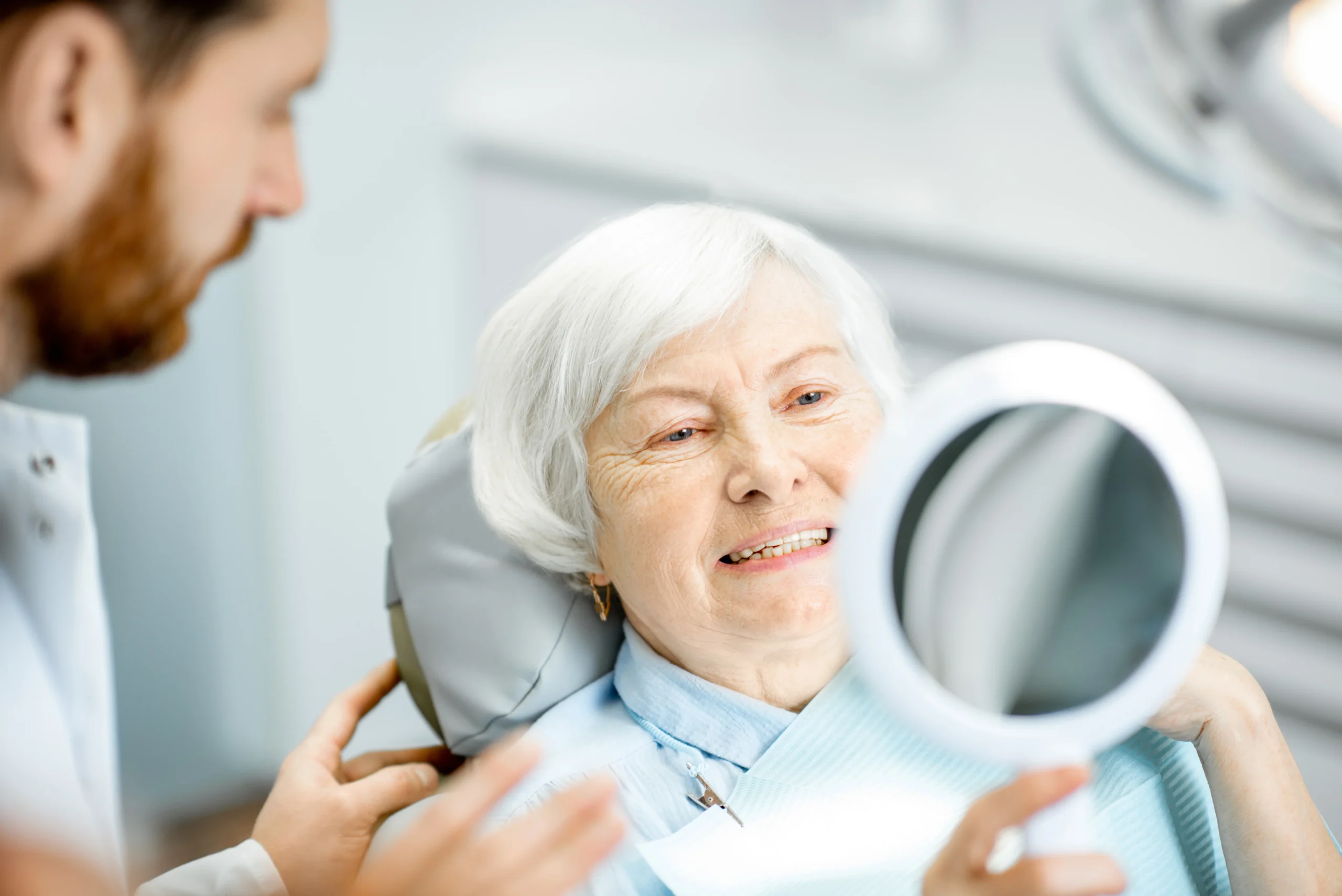
It’s often a small moment that makes the room feel quieter. A parent who used to snack stops chewing. A loved one turns their head away from the toothbrush. Water suddenly “hurts.” If you’re noticing signs of declining health in elderly family members, the mouth is one of the first places those changes can show up, because comfort, hydration, nutrition, and sleep all pass through it.
If you want help sorting out what’s going on, you can request an in-home visit so a clinician can assess oral comfort in a familiar environment and help you build a practical next-step plan.
Signs of Declining Health in Elderly Adults Often Show Up as Oral Routine Changes
A lot of families expect signs of declining health in elderly loved ones to look like a dramatic medical event. More often, it looks like a routine that stops working.
Common early oral routine shifts include:
- Brushing becomes shorter, rushed, or refused
- Flossing disappears from the day entirely
- Dentures are worn less often, or removed and “lost”
- Meals shift toward softer foods without a clear reason
- Sleep becomes fragmented because discomfort wakes them
If mobility or cognition is part of the picture, these changes can snowball quickly. That’s why many households prefer support that comes to the patient. Dental Home Services offers mobile care across New Jersey and parts of New York, with home visits explained on the services page.
Signs of Declining Health in Elderly People: Dry Mouth Is a Quiet Red Flag
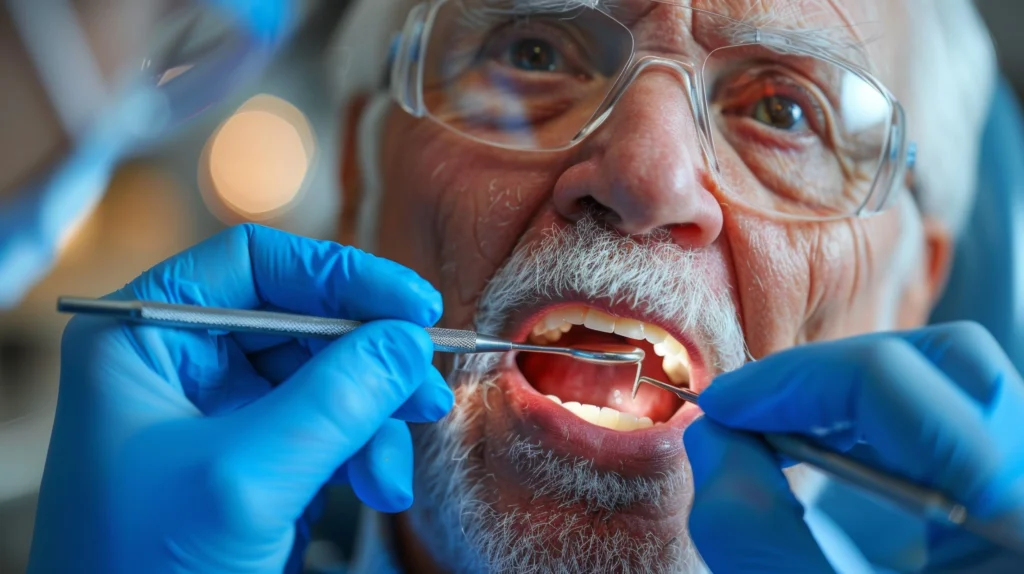
One of the most common oral clues is dryness. “Dry mouth” can sound minor, but it can change everything. It can make gums feel sore. It can make dentures rub. It can make swallowing feel harder. It can also make people avoid drinking.
The first time it’s referenced here, the National Institute of Dental and Craniofacial Research explains that dry mouth can be related to many factors, including medications and health conditions. After this point, references will simply note NIDCR.
Practical dry mouth clues caregivers can spot:
- Lips are cracking more often
- Sticky saliva or “stringy” saliva
- Complaints of burning or soreness
- Avoiding dry foods like crackers or toast
- Waking at night to sip water
If you’re trying to stabilize comfort quickly, this guide on how to improve gum health quickly can help you focus on gentle daily steps that reduce irritation while you plan next care.
Signs of Declining Health in Elderly Adults: Bleeding Gums and Tender Spots
Bleeding gums aren’t always “just brushing too hard.” They can also signal that daily cleaning is slipping because of fatigue, arthritis, or changing routines. They can also appear alongside dry mouth, which makes tissue more fragile.
Oral clues to watch:
- Bleeding that repeats in the same spots
- Tenderness at the gumline
- A puffy area between two teeth that keeps returning
- A bad taste that lingers
If a caregiver is noticing swelling localized between teeth, the page on swelling of gums in between teeth can help you recognize common triggers and understand which patterns deserve evaluation.
Signs of Declining Health in Elderly People: Appetite Shifts That Start in the Mouth
A big clue is not “they’re eating less.” It’s what they stop eating first.
Common mouth-driven changes:
- Crunchy foods are avoided first (apples, chips, crusty bread)
- Protein becomes harder to chew (meat, dense fish)
- Temperature sensitivity leads to avoiding cold water or hot soup
- Meals take much longer, or food is held in the cheek
These can look like “picky eating,” but in real life, the mouth often drives the change. When chewing hurts, people protect themselves by narrowing their diet.
If you’re supporting an older adult and want a clearer lens on what senior-focused dentistry should look like, this guide on finding a dentist for seniors can help families understand what to prioritize.
A Quick Table of Oral Clues That Suggest Decline
This isn’t a diagnosis tool. It’s a caregiver “pattern spotter” to help you decide what to document and what to escalate.
| Oral Clue | What It Can Suggest | A Practical Next Step |
| New dry mouth | Medication effects, dehydration risk (NIDCR) | Offer sips if safe, track timing, ask a clinician |
| Bleeding gums | Inflammation and missed gumline cleaning | Gentle daily gumline brushing, schedule evaluation if persistent |
| Refusing chewy foods | Tooth pain, gum tenderness, denture rub | Switch to softer foods short-term and evaluate |
| New mouth odor or bad taste | Possible infection or gum issues | Don’t “wait it out,” schedule evaluation |
| Sudden denture refusal | Sore spots, fit shift, mouth pain | Check for visible irritation and seek adjustment help |
| One-sided face puffiness | Infection risk | Use urgent guidance and seek care promptly |
For older adults, these clues can overlap with bigger changes. The point is not to panic. It’s to catch the pattern early.
Signs of Declining Health in Elderly Patients: Denture Fit Changes and Hidden Soreness
Dentures can become uncomfortable even when they look “fine.” Weight changes, gum changes, and dryness can all affect fit. Then the denture starts rubbing. The person starts removing it more often. Eating becomes harder. Speech changes slightly. Social confidence drops.
Clues that the denture is part of the decline:
- Taking the denture out earlier each day
- Avoiding certain textures
- Complaints that it “feels loose”
- Sore spots on gums or under the tongue
- Increased saliva or drooling (sometimes a sign of irritation)
Mobile visits can be especially helpful here because the clinician can see the real routine and talk to caregivers in the same space where challenges happen.
Signs of Declining Health in Elderly Adults With Dementia: Pain Often Looks Like Behavior

With dementia, pain doesn’t always arrive as a clear sentence. It can show up as restlessness, refusing food, sudden agitation during brushing, or pulling at the cheek. That’s why oral discomfort can be missed until it becomes a bigger health issue.
Caregiver clues that can signal oral pain:
- New resistance to brushing or dentures
- Face rubbing, jaw clenching, or lip pulling
- Increased pacing at night
- Sudden shouting or agitation during meals
- “No” to food that was fine last week
The resource on dementia and dental care can help caregivers connect these behaviors to oral routines and comfort, especially when cooperation changes.
Signs of Declining Health in Elderly People: Facial Swelling Is a “Move Fast” Clue
Some oral clues are uncomfortable but stable. Facial swelling is different. If one side of the face looks puffy, warm, or rapidly changing, it can indicate infection risk that needs fast decisions.
If you’re seeing swelling, use the guide on face swelling from tooth to decide next steps and understand which warning signs should trigger emergency care.
How Dental Home Services Supports Seniors When the Mouth Is the First Clue
A lot of families don’t delay care because they don’t care. They delay because the logistics are heavy. Wheelchair transfers. Stairs. Exhaustion. Confusion in unfamiliar environments. Waiting rooms that overwhelm.
Dental Home Services provides mobile dentistry across NJ and parts of NY, and explains what care can include on the services page. If you want perspective from other families, the reviews page can help set expectations for what an in-home visit feels like.
For more caregiver-friendly guidance, the blog includes additional topics that support home routines without sending you into a rabbit hole of worst-case searches.
If it’s easiest to speak to someone directly, call 1-800-842-4663.
A Calm “Next 48 Hours” Plan for Signs of Declining Health in Elderly Adults

If you’re noticing oral clues and you need a steady plan for the next day or two, focus on comfort and observation.
- Keep foods soft and easy to chew
- Encourage hydration if swallowing is safe
- Keep brushing gentle and short rather than forcing long sessions
- Track the pattern: what hurts, when it hurts, what changed this week
- Note any swelling, fever, or rapid shifts in alertness and seek urgent care when needed
If you want a clinician to assess oral comfort at home, you can request an in-home visit and share the pattern you’re seeing.
Signs of Declining Health in Elderly: Oral Clues Can Be the First Door Back to Stability
When the mouth is comfortable, eating improves. Hydration improves. Sleep becomes more stable. Cooperation with daily care often improves too. That’s why oral clues deserve attention. They’re not “just teeth.” They’re often the first visible sign that the day is getting harder.
If your family needs support across New Jersey or parts of New York, Dental Home Services can help assess oral comfort in a familiar setting and coordinate a plan that fits real-life constraints.
Frequently Asked Questions About Signs of Declining Health in Elderly Oral Clues
What are early signs of declining health in elderly people that show up in the mouth?
Early signs can include dry mouth, gum bleeding, refusing chewy foods, denture refusal, and increased agitation during brushing.
Can dry mouth be one of the signs of declining health in elderly adults?
Yes. NIDCR notes dry mouth can be connected to medications and health conditions, and it can affect comfort, chewing, and hydration. (NIDCR)
When should a caregiver seek urgent help for oral changes?
Facial swelling, fever, or rapid worsening symptoms should be treated as time-sensitive. For dental-related facial swelling decisions, use the face swelling guidance.
Who can help with in-home dental care for seniors in NJ and parts of NY?
Caregivers can contact Dental Home Services for mobile dental care across New Jersey and parts of New York.
Important Disclaimer
This article is for educational purposes only and does not provide medical or dental advice. Every situation is different, so consult qualified healthcare professionals for diagnosis and treatment planning. If there is facial swelling, fever, trouble breathing or swallowing, uncontrolled bleeding, or any urgent concern, seek emergency medical care right away.