

A wiggly adult tooth can be unnerving in a way few dental problems are. It is not just discomfort. It is the feeling that something important is no longer secure. For some people, the tooth only shifts a little when they bite. For others, it becomes hard to stop checking it with the tongue, which only makes the worry louder. For seniors, homebound adults, and people living with dementia, the first clue may not even be “this tooth is loose.” It may be slower chewing, sudden food refusal, or a new reluctance to brush. Dental Home Services provides in-home dental care across New Jersey and parts of New York, which can be especially important when travel is difficult or the person in pain is easily overwhelmed.
The strongest outside evidence here comes from the National Institute of Dental and Craniofacial Research. NIDCR explains that periodontal disease is an infection of the tissues that hold teeth in place. It begins with swollen, red, or bleeding gums, and if it is left untreated, it can spread to the bone around the teeth. In more advanced cases, teeth may become loose and may even need to be removed. That gives readers an important frame right away: a wiggly adult tooth is often a support problem, not just a surface problem.
That is also why a wiggly adult tooth should not be treated like a curiosity that can be watched forever without context. Sometimes the looseness is mild. Sometimes it follows trauma, clenching, gum disease, or deep decay. Sometimes it is paired with pain on chewing, gum bleeding, swelling, or a bad taste that suggests infection. The services page explains that Dental Home Services can bring exams, X-rays, extractions, gum infection treatment, and other dental care directly to the patient. Families who need next steps can use the contact page or call 1-800-842-4663.

Why a Wiggly Adult Tooth Happens
When someone says, “my tooth feels loose,” the first useful question is not always how loose it is. It is what else is happening around it. Gum disease is one of the most important causes to consider because NIDCR says it is typically driven by plaque buildup and can damage the tissues and bone that keep teeth stable. That means a tooth may start to feel a little mobile before the problem looks dramatic in the mirror. If the gums are also swollen, tender, or bleeding, the issue may be broader than one tooth.
That is why the related gum pages belong naturally in this article. If the gums are irritated, how to improve gum health quickly can help readers think about immediate habits that support the tissue around the tooth. If the looseness seems to sit beside a puffy, sore area between teeth, swelling of gums in between teeth is especially relevant. Dental Home Services’ recent gum-swelling article notes that localized swelling can come from trapped food, plaque buildup, aggressive brushing, dry mouth, or early gum disease changes, and it emphasizes calm action over guesswork.
When a Loose Tooth Is Tied to Decay or Structural Damage
A wiggly adult tooth is not always driven by gum disease alone. Sometimes deep decay or structural breakdown is part of the picture. A tooth that has darkened, cracked, or started catching food may already be compromised, and looseness can be one more sign that the tooth is no longer stable. The guide for managing a decayed tooth broken off at the gum line fits this topic well because it explains that broken or badly decayed teeth can expose sensitive areas, increase infection risk, and sometimes require extraction or restorative planning rather than passive observation.
Swelling changes the tone of the decision too. If a loose tooth is also paired with expanding facial swelling, that is a stronger warning sign than looseness alone. The article on face swelling from teeth belongs in this reader journey because facial swelling can point to infection or a more advanced problem that needs timely evaluation. A tooth that is loose, painful, and accompanied by swelling is not something to keep poking at while hoping it calms down.
When the Tooth Is Only Slightly Loose
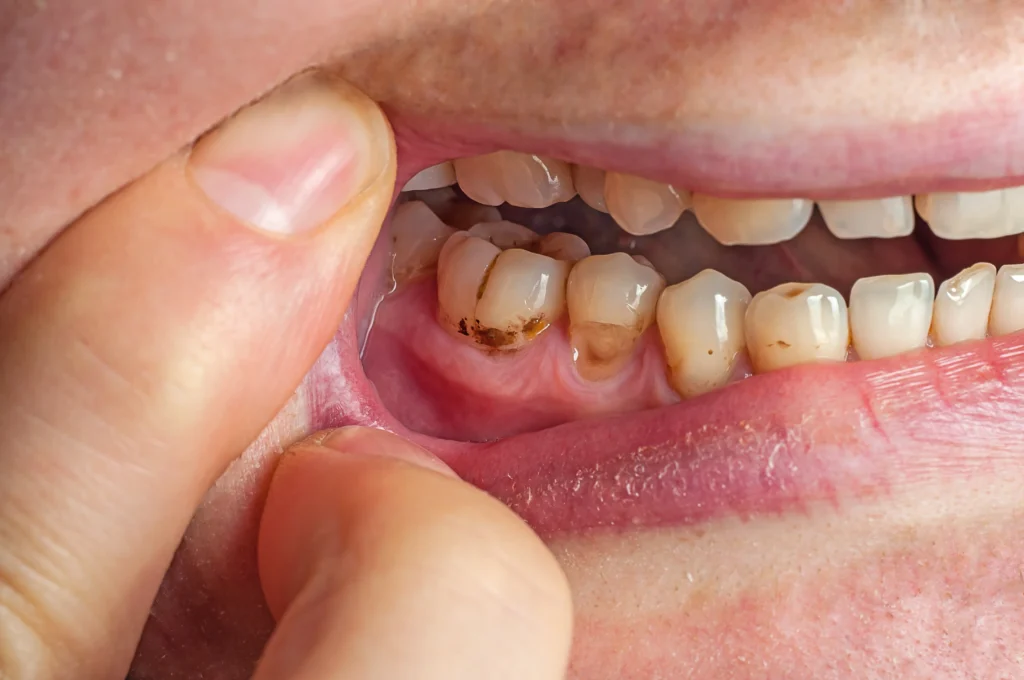
If an adult’s tooth is slightly wiggly, it can still be a fairly bothersome distraction. Mild looseness often creates a strange mental loop where the person keeps checking it with the tongue, biting on it gently, or comparing it to the tooth on the other side. That usually adds irritation without answering the real question, which is why the tooth feels unstable in the first place. A small amount of movement does not automatically mean the tooth is about to be lost, but it does mean the support around it deserves attention.
For caregivers, mild looseness can be easy to underestimate, especially if the person cannot explain symptoms clearly. A homebound senior or a person with dementia may not say, “this tooth is moving.” They may chew only on one side, push food away, or become newly irritable during brushing. Dental Home Services’ home-care content points out that mouth pain often shows up as behaviour changes before it shows up as a clear complaint. That makes “slightly loose” something worth respecting, not something worth dismissing.
Can a Loose Adult Tooth Be Saved?
One of the hardest questions around a wiggly adult tooth is whether it can still be saved. Sometimes the answer is yes, depending on the cause, the amount of support left, and how early the problem is addressed. If inflammation is a major factor and the supporting tissues can still respond to treatment, the outlook may be better. If severe bone loss, advanced infection, or structural failure is involved, the options may be narrower. That is why an exam matters more than a guess.
This is also where writing has to stay honest. A loose adult tooth does not usually “heal itself” in a dependable way if the underlying support is still being damaged. Waiting may reduce irritation for a day or two, but it does not remove plaque, rebuild bone, or treat infection. The better question is whether the cause can be identified and treated soon enough to improve the situation. Families wanting a more senior-focused overview can also read dentist for seniors, which explains why comfort, mobility, trust, and pacing matter so much in older-adult dental care.
What Not to Do With a Wiggly Adult Tooth
The safest guidance here is simple. Do not keep wiggling the tooth to “test” it. Do not yank on it. Do not bite on it repeatedly to compare sides. Do not assume it is harmless just because it is not dramatically painful yet. A loose tooth may be tied to gum disease, infection, trauma, or decay, and home experimentation does not fix any of those causes. It just adds more stress to the area.
A calmer approach usually makes more sense. Reduce pressure on that side when eating. Keep the mouth as clean as the person can comfortably tolerate. Watch for gum bleeding, swelling, worsening chewing pain, or a bad taste. Then move toward professional advice. If getting to a clinic is the main obstacle, traveling dentist is an important page to read because it explains how Dental Home Services brings care to private homes, assisted living communities, nursing homes, and memory care settings.
Why a Wiggly Tooth Feels Different in Older Adults
A wiggly adult tooth in an older adult often lands differently because it affects more than the mouth. It can change what the person is willing to eat. It can make them avoid dentures, skip brushing, or speak less because the tooth feels unreliable. For someone already dealing with frailty, stroke history, memory loss, or anxiety, even a “small” loose tooth can disrupt a surprising amount of daily life.
That is one reason in-home dentistry can be such a relief. It removes the travel barrier and lets the family address the problem where the patient is already most comfortable. Readers who want reassurance before taking that step can also visit the reviews page or browse the blog for more caregiver-focused guidance and examples of how the practice approaches home-based care.
Finding a Solution if a Tooth Feels Loose as an Adult

If an adult tooth feels loose, the most useful next step is not to panic and not to ignore it. It is to look at the whole picture. Is there gum bleeding? Swelling? Pain while chewing? A recent blow to the mouth? A broken edge? A bad taste? A change in how the person eats? Those surrounding details matter because they often point more clearly to the cause than the looseness alone.
For families in New Jersey and nearby New York service areas, Dental Home Services can provide in-home dental support when travel is difficult or the patient is best treated in familiar surroundings. A loose adult tooth is not a reason to assume the worst, but it is a reason to take the mouth seriously and get help before the problem has more time to grow.
Frequently Asked Questions About a Wiggly Adult Tooth
Why does a wiggly adult tooth happen all of a sudden?
A loose adult tooth can seem sudden even when the underlying problem has been building quietly. Gum disease, infection, trauma, and deep decay are all common possibilities. NIDCR specifically notes that untreated gum disease can damage the tissues and bone that hold teeth in place, which is why looseness should be taken seriously.
Can a loose adult tooth go back to normal on its own?
Sometimes irritation may feel a little better if the tooth is left alone, but the underlying cause still needs attention. A loose tooth often signals a support problem, not just a temporary sensation. That is why evaluation is usually more useful than watchful waiting.
Is a front tooth that feels loose more urgent?
A front tooth often feels more alarming because the movement is easier to notice and harder to ignore. The same core rule applies, though: the concern is not just the movement. It is what the movement says about the support around the tooth and whether gum disease, trauma, or decay is involved.
Who can help with a wiggly adult tooth in NJ or nearby NY?
Families who need home-based dental care can contact Dental Home Services, which provides mobile dental support across New Jersey and parts of New York.
Disclaimer: This article is for informational purposes only and is not medical or dental advice. Seek urgent care for facial swelling, fever, trouble swallowing, uncontrolled bleeding, or rapid worsening of pain or looseness.