
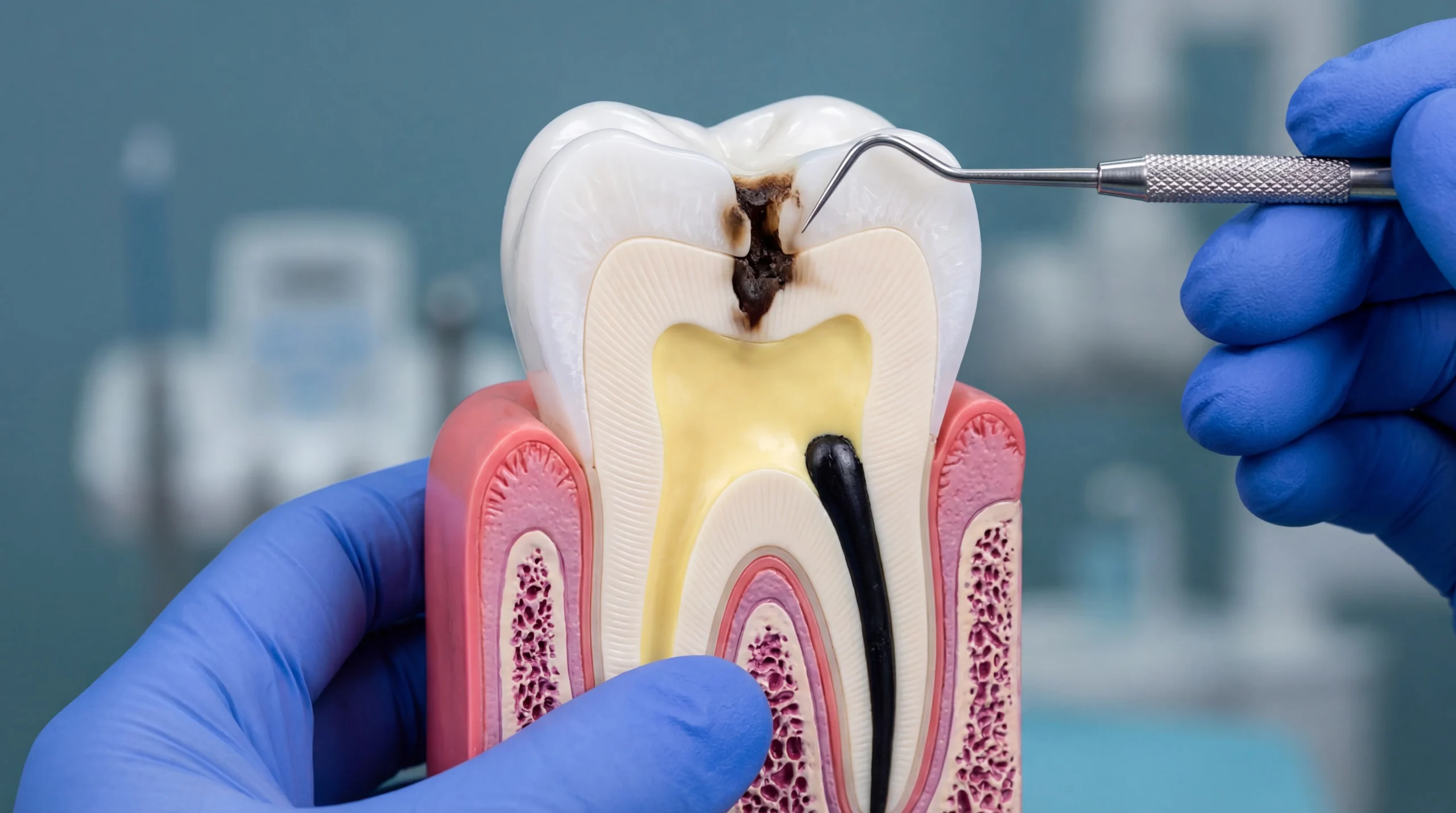
When families ask how fast cavities grow, they are usually trying to answer a more urgent question: “Is this something we can watch, or is this something we need to act on now?” The honest answer is that cavity growth is not one-speed. Some areas of damage stay subtle for a while. Others move faster once the enamel has weakened and the tooth surface is no longer holding the line. For seniors, homebound adults, and people living with dementia, that uncertainty matters even more because the first clues are often missed or explained away. Dental Home Services provides in-home dental care for older adults and homebound patients across New Jersey and parts of New York, which makes early recognition especially important for families trying to decide what to do next.
A useful way to frame how fast cavities grow is to stop thinking only about the final hole in the tooth and start noticing the earlier changes that come before it. Dental Home Services’ related guide on how quickly do cavities form describes the sequence clearly: early mineral loss can look like a chalky or dull spot, then the surface may feel rough or start catching food, and deeper involvement may show up as ongoing pain, swelling, or a visible dark area. That progression is exactly why caregivers should pay attention before the tooth reaches the stage where a crisis is obvious.
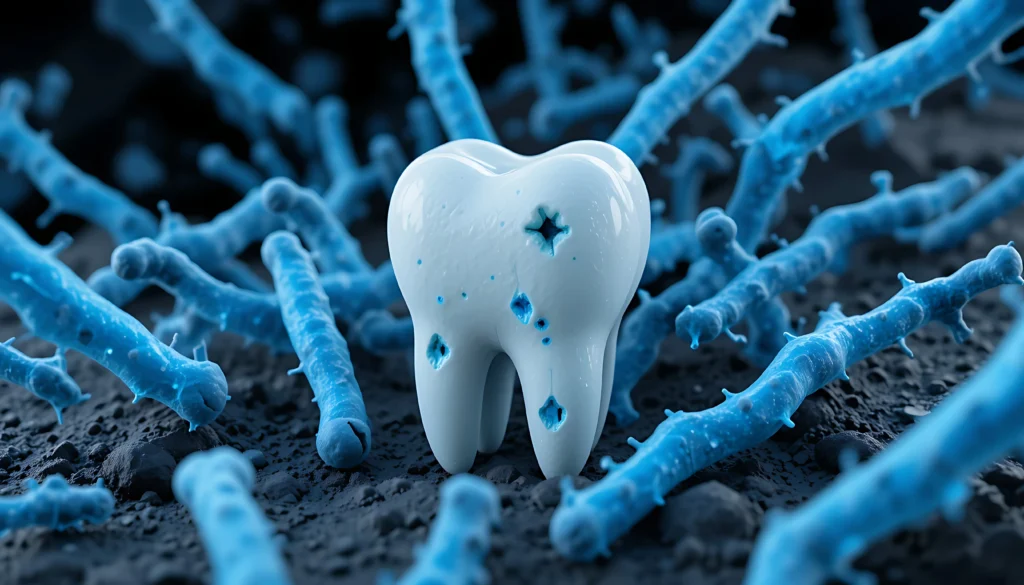
There is also a bigger biological reason cavities happen at all. In Digging Into the Past to Uncover the Cause of Our Cavities, the National Human Genome Research Institute summarizes research suggesting that changes in human diet altered the oral ecosystem and that oral disease seems to be driven more by the bacteria in our mouths than by our genes. That matters because when people ask how fast do cavities grow, the answer is tied not just to time but to plaque, diet, hygiene, dry mouth, and the daily conditions that let harmful bacteria keep working.
How Fast Do Tooth Cavities Grow on Average?
In real life, how fast tooth cavities grow depends on where the tooth is weak, how long plaque has been sitting there, how dry the mouth is, how often the person eats or sips sugars, and whether the area is being cleaned well enough to interrupt the process. A tiny chalky spot can stay subtle for a while. But once the surface starts breaking down, things can change much faster, especially if food keeps catching in the same place or the tooth is no longer easy to brush. Dental Home Services’ blog makes this caregiver-friendly by describing the visible signs at home rather than keeping the explanation purely clinical.
That same logic helps answer how fast do dental cavities grow in older adults. Aging, medications, dry mouth, reduced dexterity, fatigue, and changes in routine can all make brushing less effective and plaque harder to control. Dental Home Services notes elsewhere that homebound and medically complex patients often face exactly these practical barriers, which means the cavity question is rarely just about a tooth. It is about the whole environment around the tooth.
How Fast Do Teeth Cavities Grow When Care Routines Slip?
For caregivers, how fast do teeth cavities grow becomes a much more important question when routines start breaking down. A person may begin skipping brushing, resisting help, or sleeping more often with food residue still in the mouth. In dementia care, this can happen quietly. Dental Home Services’ dementia-related resources note that poor oral hygiene can contribute to infections, gum disease, and worsening mouth discomfort, and its dementia content emphasizes that caregivers often see the effects before they hear a complaint. That makes “routine drift” one of the most important things to catch early.
This is also why the article on dental plaque and dementia belongs in the reader journey here. The page is positioned for families who are already noticing that plaque buildup, discomfort, or behavioural changes may be connected. When someone asks how fast can a cavity grow, the practical answer is often, “faster than you think, if plaque keeps sitting in the same place day after day and no one realizes the mouth has become harder to manage.”
How Fast Do Cavities Develop Before Caregivers Notice Them?
One reason families worry about how fast cavities develop is that the first stage can be easy to miss. A caregiver may not see a cavity at all. They may see a loved one suddenly preferring one side for chewing, avoiding cold drinks, pausing at sweet foods, or taking longer to finish meals. Dental Home Services’ cavity guide helps here because it translates early disease into home-level clues like chalky spots, rough edges, food catching, and tenderness before the bigger warning signs appear.
That framing also helps with how fast can cavities develop in the households Dental Home Services serves most often. When the person is bedridden, uses a wheelchair, or cannot travel easily, there may be fewer routine checkups catching early problems. The site’s home-care content explains that visiting dental services can make care more manageable for these patients, which is important because delayed evaluation can let early damage become a more painful and more complicated problem. Families who need that kind of support can review the services page or use the contact page to arrange an in-home visit.
How Quickly Do Cavities Progress Once Pain Starts?
By the time pain is consistent, the question often changes from how quickly do cavities progress to “how urgent is this now?” That is a key shift. Dental Home Services’ cavity guide says deeper involvement may look like ongoing pain, swelling, a visible dark area, or a broken tooth edge. Those are not early whispers anymore. They are signs that the tooth may already be beyond the most reversible stage.
This is where the site’s related gum pages become highly relevant. If the area around the tooth is puffy, irritated, or repeatedly inflamed, the reader should naturally move to how to improve gum health quickly or swelling of gums in between teeth. Dental Home Services’ gum-swelling content specifically notes that plaque can sit in one area and that recurring localized swelling can be a clue something is building there. That reinforces the central point of this article: a cavity problem is often part of a wider local plaque pattern, not a random event.
How Long Does It Take for a Cavity to Develop in Older Adults?
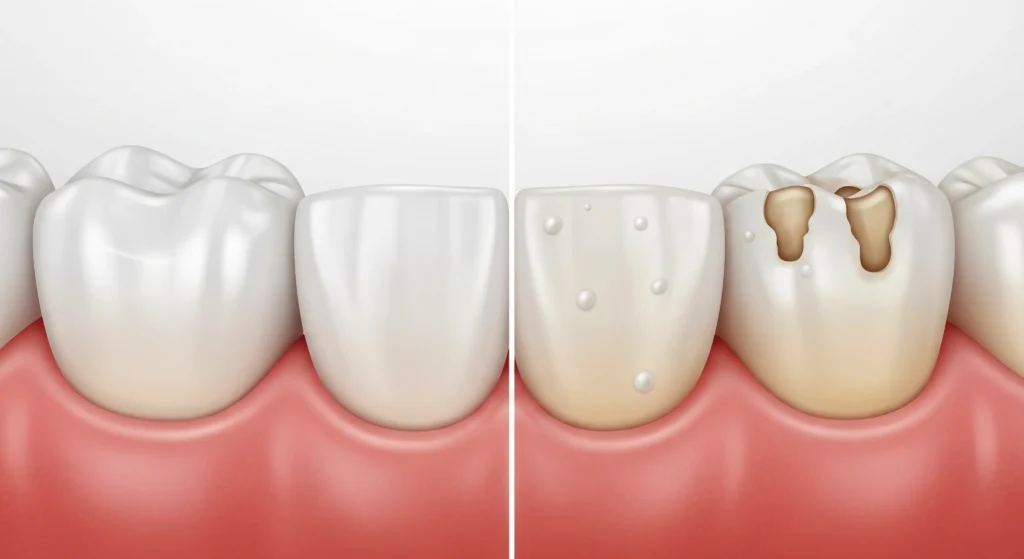
People naturally want a clean calendar answer for how long does it take for a cavity to develop, but the more truthful answer is that it varies by stage and by person. The earlier changes can take time to become obvious. The later stages can seem to “suddenly” appear because the early steps were hidden or misunderstood. What matters more than guessing the exact number of weeks or months is learning the pattern of warning signs that show the tooth is moving in the wrong direction.
For seniors, the question of how fast can a cavity develop is also shaped by dry mouth, gum recession, limited brushing time, and older dental work that creates edges where plaque likes to hide. Dental Home Services points to these types of real-world factors in its educational content, which is why caregivers should not assume that “it looked fine not long ago” means it is still fine now. Small daily obstacles can shift the speed of damage more than families expect.
How Fast Can You Get a Cavity if Eating and Brushing Change?
A sudden change in eating or brushing habits can make caregivers ask how fast you can get a cavity almost in disbelief. The reason that question feels so urgent is that the change is often behavioural before it is visible. The person stops brushing well. Snacks more often. Drinks sweet beverages more regularly. Falls asleep after meals. Or refuses mouth care altogether. In people living with dementia, Dental Home Services notes that these shifts can increase infection risk and make oral problems harder to catch early.
This is another reason the article on dentists for seniors should be part of the internal linking here. That page explains why senior-focused dental care is about more than treatment. It is about finding care that accounts for comfort, patience, trust, mobility, and the realities of aging. When the question is how long does it take to develop a cavity, senior context changes the answer because the care environment changes the risk.
How Quickly Does a Cavity Progress in Dementia Care?
In dementia care, how quickly a cavity progresses is often tied to how quickly the care team notices behavioural clues. A person may not say the tooth hurts. They may point to the wrong place, resist dentures, stop eating certain textures, or suddenly become defensive during brushing. Dental Home Services’ dementia content makes this especially clear: nonverbal signs often carry more information than direct complaints. That is why the cavity question and the caregiver-observation question really belong together.
For families who need ongoing support and education, the blog offers a wider library of caregiver-oriented content, while the traveling dentist page explains how mobile dentistry can reach patients in private homes, assisted living communities, nursing homes, and memory care settings. When transportation is the obstacle, mobile care changes how quickly someone can be seen, and that can change how quickly a growing problem gets interrupted.
How Fast Does a Cavity Grow Once the Tooth Starts Breaking Down?
Once the tooth surface is breaking down, the question of how fast a cavity grows becomes much less theoretical. Roughness, food trapping, darkening, swelling, and one-sided chewing are all signs that the problem may be moving from “monitor carefully” toward “get this checked.” Dental Home Services’ cavity guide and related pages are useful because they give families specific things to look for at home instead of vague reassurance.
That is also the moment when a reader should stop asking only “how long does it take a cavity to develop” and start asking what kind of support will help this person get treated soonest and most safely. Families who want reassurance before booking can review reviews, which highlight the practice’s traveling dental model, or simply call 1-800-842-4663 to talk through next steps.
How Fast Do Cavities Grow? The Caregiver Answer Is “Watch the Pattern”
The most helpful answer to how fast do cavities grow is not a rigid number. It is a pattern-based answer. Early mineral loss can be subtle. Surface changes may show up as dull spots, roughness, or food catching. Deeper progression may bring pain, swelling, visible dark areas, or chewing changes. Caregivers do not need to diagnose the stage perfectly. They need to notice when the pattern is shifting and move sooner rather than later.
The good news is that caregivers do not have to sort all of this out alone. Dental Home Services’ mobile model is built for seniors, homebound adults, and patients with dementia who may not be able to get to a traditional office easily. Families across New Jersey and parts of New York can ask for help in the home instead of waiting for travel, scheduling, or behaviour challenges to make the problem worse.
Frequently Asked Questions About How Fast Do Cavities Grow
How Fast Do Tooth Cavities Grow if a Senior Has Dry Mouth?
Dry mouth can make cavity risk worse because saliva helps protect the mouth. When the mouth stays dry and plaque is not cleared well, damage can become easier to start and easier to miss. That is one reason senior oral changes deserve early attention.
How Fast Can a Cavity Develop if a Caregiver Notices Food Catching in One Spot?
Food catching in one area can be a sign that the tooth surface is no longer smooth. Dental Home Services’ cavity guide describes that as a clue that surface breakdown risk may be rising, which means it is worth getting evaluated before pain becomes constant.
How Long Does It Take for a Cavity to Develop in Someone With Dementia?
There is no single timeline, but dementia can make early signs easier to miss because the person may not explain what hurts clearly. Behaviour changes, meal refusal, face touching, or new resistance during brushing may be more useful clues than a verbal complaint.
Who Can Help if We Are Worried About How Fast Do Cavities Grow in NJ or Nearby NY?
Families who need in-home dental care can contact Dental Home Services, which provides mobile dental support across New Jersey and parts of New York.
Disclaimer: This article is for informational purposes only and is not medical or dental advice. If a senior or homebound adult has worsening pain, swelling, fever, bleeding, trouble eating, or rapid changes in behaviour around the mouth, seek prompt professional care.